Real Estate Listings vs. Websites: Which Works Better?

Introduction: Visibility vs. Control
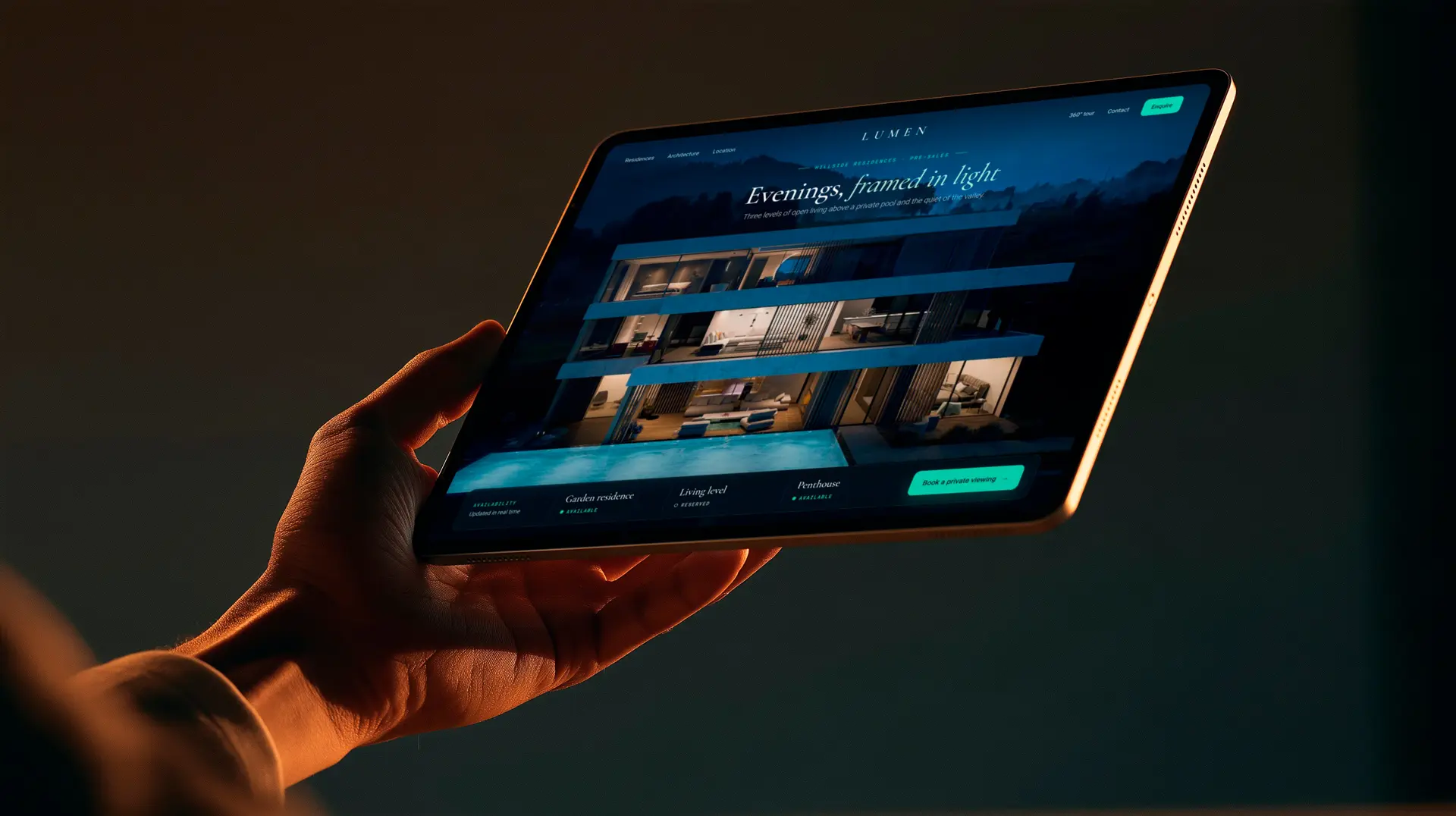
A buyer opens a property portal on a phone late in the evening. Filters for city and budget narrow the results to a few dozen near-identical cards. One new development stands out because of its lead image. A few minutes later the same buyer is on the developer’s own site, comparing layouts and checking which units are still free. That short journey explains the debate around real estate listings vs. websites better than any definition.
Online search is now the default. According to the 2025 NAR Profile of Home Buyers and Sellers, 52% of US buyers found the home they purchased online and 70% used a phone or tablet during the search. The real question is no longer whether to be online. It is where a property should be presented and who should own the conversation that follows.
Real estate listings on portals bring visibility. A real estate website brings control. Each channel serves a different stage of the buying decision. This article compares both for developers, agents and agencies. It shows which segments benefit from each option and explains why a strong real estate marketing plan usually combines them.
Real Estate Listings: Pros and Cons
Property portals remain the fastest way to reach people who are already searching for a home. For most real estate marketing budgets, they are the first line item.
Advantages of Listing Platforms
Property portals such as Zillow, Rightmove and ImmoScout24 have built their audiences over two decades. A property published today can appear in front of active buyers tomorrow. No traffic has to be generated from scratch. Search filters, saved alerts and map views handle the matching work. For a resale apartment with a clear price and location, that speed often matters more than anything else. Portals also lend credibility. A property on a well-known platform looks established. Buyers already know the format and trust its filters.
Entry is fast and needs no build budget. Professional advertisers usually pay a monthly subscription instead of financing design, development and hosting. The subscription is an ongoing cost, however. In 2025 Rightmove’s average revenue per advertiser reached £1,621 per month, up 6% on the previous year, mainly through upgrades to premium packages.
Distribution is also widening. Zillow launched an app inside ChatGPT in 2025 and added a connector for Claude in October 2026, so buyers can now search listings in a chat window. Since June 2026 Google has shown listings from participating MLSs directly in US mobile search results. For property listings, the reach of a single upload keeps growing through listing syndication across new channels.
Limitations of Listing Platforms
The same reach creates the first problem: every competitor is one swipe away. A listing sits in a uniform grid with identical photo slots, text fields and contact buttons. Differentiation is limited to image quality, price and the first lines of the description.
Branding is the second limit. The portal’s logo frames every property. The portal also decides the layout, the ranking and which competing offers appear next to it. Paid project packages loosen these limits, sometimes even hiding third-party ads. The portal’s frame and rules still apply. Even the new AI channels follow this logic. After a search in ChatGPT or Claude, the next steps such as booking a tour, contacting an agent or exploring financing still lead back into Zillow.
Dependence is the third. Rules and access can change without the advertiser having a say. In May 2026 a dispute between Zillow and the Chicago-area MLS operator MRED removed most Chicago listings from Zillow until a court ordered the listing feeds restored. Pricing follows the same logic, because portal fees are set by the portal.
Finally, most customer data stays with the platform. The advertiser receives an inquiry. Browsing behavior, saved searches and repeat visits remain in the portal’s analytics.
One project among many
Riverside · 2+ bedrooms · BuySort: Recommended
1
 2
2
▶ Video3D tour3
Hillside Residences
Terraces with open valley views
2-bed apartmentAvailable
3-bed apartmentReserved
PenthouseAvailable
Request detailsSave ♡4
2-bed apartmentRiverside district
New build, 2 bedsOld town
PenthouseRiverside district
- 1
Paid project entry
New builds run as one project page that bundles every unit. Developers pay for the package and the position.
- 2
Lead image
A strong exterior visualization decides whether the entry gets opened at all.
- 3
Rich media, fixed frame
Video and 3D tours are possible, but inside the portal’s layout and next to competitors.
- 4
Contact via the portal
Inquiries run through the portal’s own form. Buyers who want the full story search for the project name.
How to Make a Listing Stand Out
Inside a fixed template, the lead image does most of the work. Buyers scroll quickly and decide almost instantly whether to open a listing, so the first visual should show the property from its best angle and in its best light. For new developments, an exterior rendering shows what the buyer will actually own, while a construction site photo shows only work in progress. The first lines of the description matter almost as much. They should name the strongest benefit instead of repeating the address. A floor plan, a short video or a tour link adds depth where the portal allows it. A listing works best as a strong teaser that makes the buyer want the full story.
Dedicated Real Estate Websites: Pros and Cons
A dedicated website turns a property from one entry among many into a presentation the business fully controls. Here the comparison of real estate listings vs. websites shifts from reach to control.
What a Dedicated Website Adds
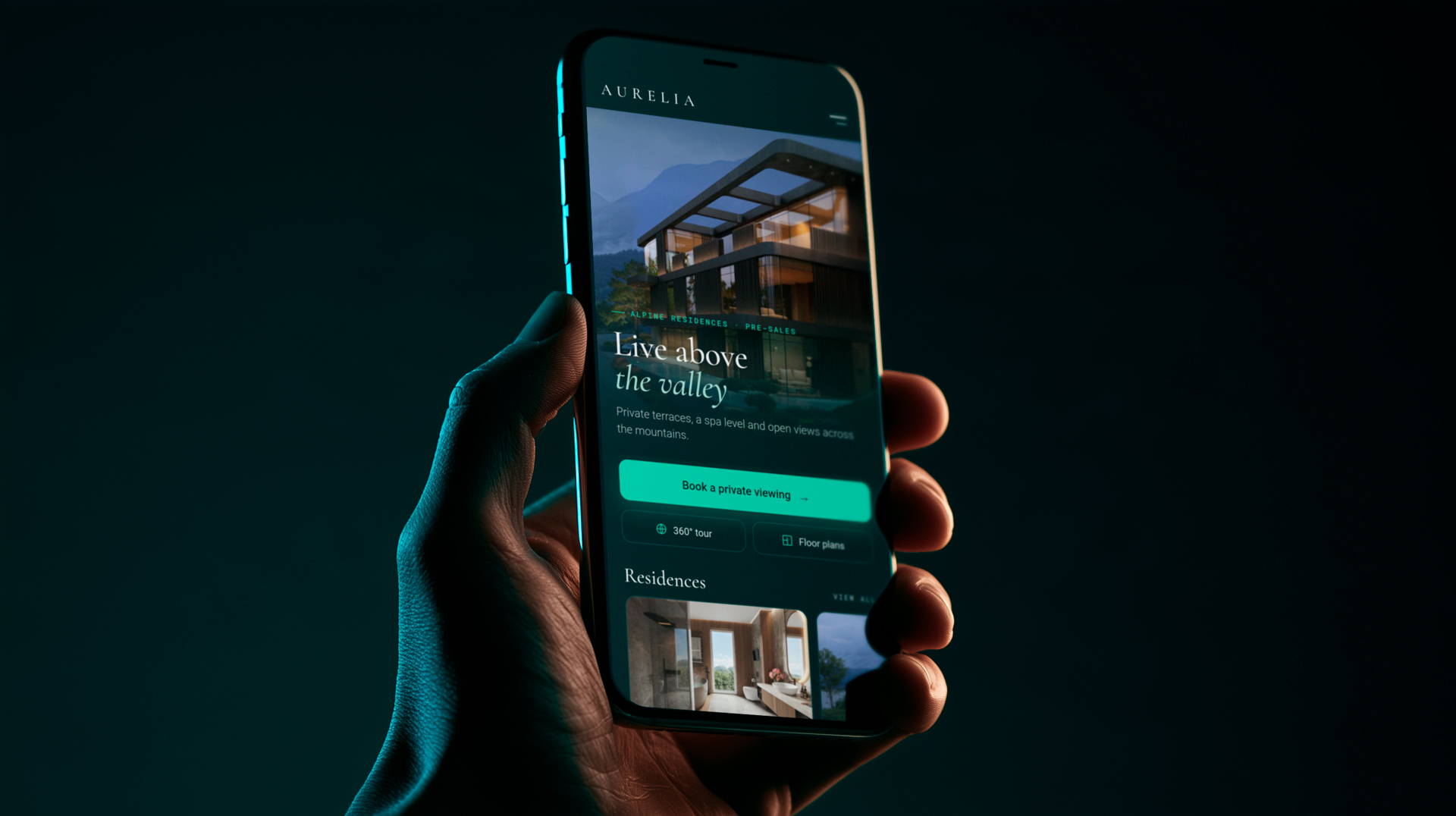
On its own domain a developer or agency decides the story, the structure and the visual standard. A residential project page can open with an aerial exterior view at golden hour, move to interiors that show the real specification and end with the neighborhood. A portal template rarely allows that sequence. For developers with several projects, the website also connects them. A buyer who missed one building can register interest in the next. Over the years this contact database becomes one of the most valuable real estate marketing assets a company owns.
Portals now accept photos, video and 3D tours too. The difference lies in what surrounds them. On its own site a developer can combine high-resolution architectural visualization, 3D animation and 360° tours in a deliberate sequence. It can also add tools that go beyond a portal’s unit list, such as an Apartment Viewer that shows the whole building and marks every unit as available, reserved or sold. For off-plan projects this content does more than inform. A well-made 3D rendering creates the desire to buy before a single wall exists.
Real estate lead generation becomes more precise as well. Inquiry forms can ask for budget, unit type or preferred move-in date. Every lead lands in the company’s CRM with its source attached. Over time the business builds first-party data: which channels deliver qualified buyers, which units attract the most interest and which visitors return.
Costs and Challenges of a Website
A real estate website is not free visibility. Design and development require an upfront budget. Content needs regular updates. Hosting, security, legal pages and tracking setup add ongoing work. Good real estate website design also has to perform on mobile, where much of the property search now happens.
The bigger challenge is traffic. A new domain starts with no audience. Visitors have to arrive through SEO, Google Ads, paid social, email campaigns or links from the listings themselves. SEO takes months to build momentum. Paid campaigns deliver faster but need a steady budget and careful targeting.
Search itself is changing too, as Google now shows listings and AI answers directly in its results. A website therefore works best for people who already know the brand or arrive from a campaign built for them.
What Makes a Property Website Convert
A website pays off only when visitors turn into inquiries. Speed comes first, since heavy pages lose mobile visitors before the first image loads. Navigation should follow the buyer’s questions in order: what the property is, where it is, what it costs and what is still available. Price ranges, completion dates and live availability build trust because they answer questions buyers would otherwise send by email. Contact options belong on every screen as a short form, a phone number and a messenger link. Clear tracking completes the setup. Without it, the business cannot tell whether a lead came from a portal, a search ad or a newsletter
Which Approach Suits Different Real Estate Segments?
The right mix depends less on the channel and more on what a buyer needs to see before making contact.
Individual Agents Selling Existing Properties
For resale homes, portals carry most of the demand. Buyers search by area and price, compare quickly and book viewings. Real estate listings should lead the plan here. A professional agency website still plays a role: it supports the agent’s credibility, hosts reviews and sold references and attracts sellers looking for representation. NAR’s 2025 data shows that 88% of buyers used an agent or broker, so trust in that agent often decides who wins the next listing. Area guides and market reports on the agency site also attract sellers who search for an agent rather than a property.
Developers Launching New Residential Projects
New construction usually needs both channels. Portals generate early awareness among buyers searching in the area. A project website explains what a listing cannot: the architecture, the variety of layouts, the amenities, the construction timeline and current availability. During pre-sales nothing can be visited yet. Visual content on the project site then carries most of the sales argument. The same assets support financing. Banks, funds and co-investors need to understand a project before committing capital. Clear visualizations make a planning concept easier to assess than technical drawings alone.
Luxury Properties
Luxury buyers expect a presentation that matches the price. A portal listing can open the door, but the decision is shaped by storytelling: light, materials, views and privacy. A dedicated microsite with cinematic animation, curated imagery and controlled access to details serves this segment better than a standard listing format. Some sellers also prefer limited public exposure, which a private page can provide. In this segment the listing is often only a signpost. The real presentation happens on the developer’s or agency’s own platform.
Commercial Real Estate
Office, logistics and retail space are sold on technical facts such as floor loads, ceiling heights, loading docks, energy ratings and lease terms. Decision-makers compare these details across a shortlist and share them internally. Commercial portals help with discovery. A dedicated property website or a tailored presentation helps the asset win the internal discussion, with downloadable specifications and visuals that show fit-out options before a tenant commits.
Small Agencies
For a small agency with a limited budget, a sensible start is a fast real estate website with clear contact options plus selective listings for properties that need the widest reach. The website builds the brand over time. The listings keep the pipeline moving. As the agency grows, the site can add property pages with richer visuals for the mandates that justify the extra effort.
Listings vs. Websites: A Quick Comparison
Comparing real estate listings vs. websites across the criteria that matter most for budget planning reveals a clear pattern.
Listings vs. websites at a glance Property portalsOwn project websiteReach●Large audience of active buyers○Starts at zero, grows through SEO and adsSpeed to market●Live within hours or days○Weeks to months to design and buildCosts○Low upfront, recurring portal fees○Upfront build, then upkeep and traffic budgetBranding○Portal layout, more control in paid packages●Full control over design, story and tonePresentation○Photos, video and 3D tours in the portal’s layout●Own storyline, visualization, live Apartment ViewerLead generation○Active searchers, competitors alongside○Forms qualify by budget, unit or timingCustomer data○Mostly kept by the platform●Owned by the business, stored in its CRMLong-term value○Ends with the listing●Grows with content, rankings and brand● Stronger option○ Weaker option○ Depends on the projectListings lead on speed and reach. Websites lead on control, data and long-term value.
On reach, portals start with a large audience of active buyers, while a website starts at zero and grows through SEO, ads and referrals. Speed follows the same pattern: a listing goes live within hours or days, whereas the design and development of a site take weeks to months.
Costs are structured differently. Listings mean recurring fees set by the portal. A website means an upfront build plus maintenance and a budget for traffic. Branding and presentation clearly favor the website. A portal accepts photos, video and 3D tours, but always within its own template and next to competing offers. A dedicated site allows full control over design, story and tone, plus custom tools such as an Apartment Viewer.
Lead generation, data and long-term value complete the picture. Portals deliver inquiries from active searchers but show competing offers alongside. Website forms can qualify leads by budget, unit or timing. The data then stays in the company’s CRM instead of the platform’s analytics. Finally, the value of a listing ends with the listing or subscription. A website keeps growing as content, rankings and brand awareness build up.
Neither option wins on every criterion. Listings lead on speed and reach. Websites lead on control, data and long-term value. The comparison also shows why the two options are rarely true alternatives: their strengths lie in different areas.
Why Combining Both Can Be the Best Strategy
Listings and websites solve different problems in the same buyer journey, so the best results usually come from connecting them. Framed this way, real estate listings vs. websites is a question of roles, not rivals.
The portal works like a shop window and the website works like a showroom. The listing earns the first click from someone who is already searching. The website gives that person enough depth to move from curiosity to inquiry. A combined real estate marketing strategy links the two with a few practical steps:
- Use the same lead visuals on the portal and the website so buyers recognize the project immediately.
- Link the listing to the project website where portal rules allow it. Otherwise make the project name easy to find in search.
- Add tracking parameters to measure which portal sends the most engaged visitors.
- Run retargeting campaigns that bring portal visitors back to the website.
Example: A New Residential Development
Consider a developer launching a 60-unit residential building well before completion. On the portals, the project runs as a paid project page that bundles all units under one entry. The strongest exterior rendering serves as the lead image, followed by the starting price and the available units. That page reaches buyers browsing the area, while contact runs through the portal’s own form.
Buyers who want more search for the project name and land on its website. Architectural visualizations show the building at different times of day and the interiors in the actual finishes. A 360° tour lets them step into a show apartment that has not been built yet. Floor plans explain each layout. An Apartment Viewer shows the building from every side and marks each unit as available, reserved or sold. A buyer can select a free unit and send an inquiry in a few clicks.
The sales team receives a lead that already knows the unit, the price range and the layout. The first call starts at the right point instead of at the basics. As units sell, the viewer updates and buyers see real demand for the project. In this setup the portal and the website are not competing for the same lead. The portal creates the first contact and the website does the persuading.
How the Mix Changes Over a Project’s Life
The balance between channels shifts as a development progresses. At launch, the project website carries the story while listings test demand and collect early interest. During pre-sales both channels run in parallel. Availability data on the website then becomes a central sales tool. Close to completion, the remaining units often return to the portals with real photography because buyers now compare them with existing homes nearby. After handover the website keeps its value as a reference for the developer’s next project.
How to Choose the Right Marketing Strategy
The choice should follow the expected business outcome rather than the price of a single channel. Six criteria help structure the decision:
- Target audience: Local resale buyers start on portals. International investors and luxury buyers often research developers and brands directly.
- Property type: A standard two-bedroom apartment fits a listing template. A mixed-use development or a branded residence does not.
- Sales complexity: The more units, phases and options a project has, the more it needs a dedicated place to explain them.
- Competition: In a crowded market a listing alone competes mainly on price. A strong presentation gives buyers other reasons to choose.
- Available budget: A limited budget may cover only listings at first. A real estate website can follow once the pipeline justifies it.
- Business objectives: Selling one property fast favors listings. Building a brand, a buyer database and a base for future projects favors a website.
Cost comparisons can mislead. A monthly listing fee looks cheaper than a website build. The more useful measure is cost per sale and time to sell. A development that fills its pre-sales targets earlier secures financing earlier and moves to construction with less risk. When every inquiry is tagged by source in the CRM, these numbers become visible within one sales cycle. In practice, that makes real estate marketing decisions a matter of evidence rather than habit.
Common Mistakes to Avoid
Most problems with real estate listings vs. websites come from treating the two channels separately. These mistakes appear most often:
- Copying the portal description word for word onto the website, which leaves the site with nothing extra to offer.
- Sending portal traffic to a generic homepage instead of the specific project page.
- Updating availability on the website but not on the portals, which leads to inquiries about units that are already sold.
- Launching a website without a traffic budget and then judging it on empty analytics.
- Measuring channels by the number of leads instead of signed contracts.
Avoiding these errors costs little. It mostly requires one person or partner who sees the whole real estate marketing funnel instead of individual channels.
Conclusion: Choose the Right Mix, Not Just One Channel
Listings are the right tool for visibility and for reaching active property seekers quickly. A real estate website offers control, differentiation and customer data that the business keeps. For most developers, agents and agencies, combining both delivers the most balanced result. The exact mix depends on the property, the audience and the stage of the sales process. A simple way to remember the split: a listing answers whether a property is available, while a website answers why a buyer should choose it.
Strong property marketing follows the whole customer journey, from a compelling presentation to promotion and lead generation. It starts with visuals that make buyers want the property and continues with channels that bring those visuals to the right people. Seen this way, the choice between real estate listings vs. websites is less about picking a winner and more about giving each channel its job.



Ready for a New View?
Contact Us to Receive a Free Quote


 powered by Borlabs Cookie