


Real Estate Marketing Services Built for Property Developers
Render Vision works as a full service digital agency for property developers, real estate agencies and marketing teams who need more than scattered campaigns. We combine real estate marketing services spanning brand strategy, web development, search engine optimization, paid advertising and 3D visualization into one integrated system instead of disconnected vendors. As a trusted real estate marketing company, we connect online and offline strategies across the entire buyer journey, helping developers attract qualified buyers, generate leads and turn finished projects into signed contracts without juggling five separate teams.
Increase in Qualified Property Leads
Growth in Buyer & Investor Traffic
Increase in Project Inquiries
Reduced Cost Per Qualified Lead
Why Fragmented Real Estate Marketing Companies Cost More Than They Deliver
Juggling separate vendors for branding, websites and advertising creates costly gaps in real estate marketing campaigns.
The Hidden Costs of Working with Multiple Real Estate Marketing Firms
Hiring separate real estate marketing firms for branding, web design and paid advertising multiplies overhead through duplicated onboarding and conflicting messaging, leaving developers to coordinate marketing efforts manually instead of working with one accountable team.
Why Coordinating Multiple Real Estate Marketing Agencies Slows Project Delivery
When branding, web development and advertising are split across separate real estate marketing agencies, every decision requires cross-vendor alignment before work can move forward. Approvals stall, launch dates slip and campaign performance suffers because no single agency owns the full picture or feels accountable for the final result.
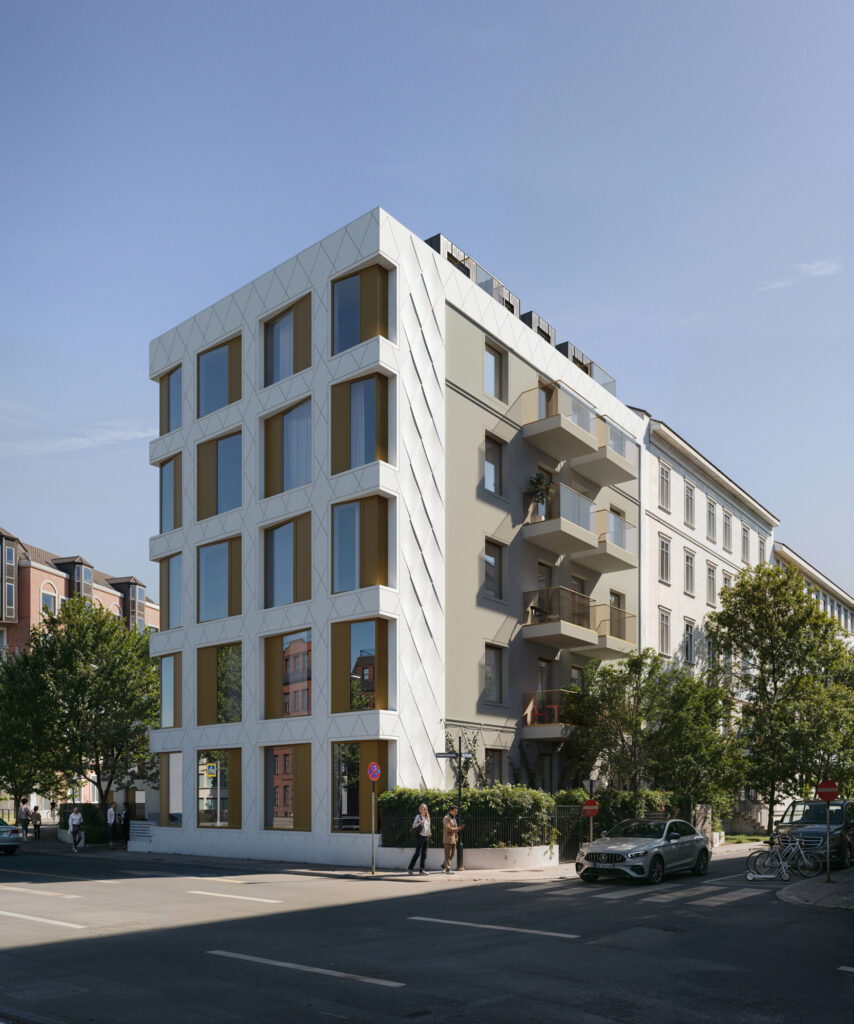

Connecting Online and Offline Strategies Across the Buyer Journey

Low-Quality Leads and Unpredictable Demand

Weak Search Visibility and Poor Market Positioning

Missing CRM, Analytics and Marketing Systems

Limited Internal Resources and Execution Capacity

How We Turn Real Estate Marketing Into a Connected Growth System
Render Vision connects strategy, creative production and performance tracking into one accountable growth system.

Strategy Before Production
Every campaign starts with target audience research and local market positioning before a single asset is built, so creative decisions follow validated insight rather than assumptions. This sequencing keeps marketing efforts focused on the channels and messages most likely to attract qualified buyers from day one.

One Creative and Performance Team
Branding, web development, paid advertising, email marketing and 3D visualization run inside one team instead of separate vendors, so a single brief informs every asset across the campaign. As a connected digital marketing agency real estate clients can rely on, we remove the handoff gaps that slow fragmented setups down.

Campaigns Measured by Leads, Sales Pipeline and ROI
Every channel reports into the same dashboard, so leads, sales pipeline movement and ROI stay visible at a glance instead of living in separate platform logins. This shared view lets the team shift budget toward what is actually closing deals, turning marketing services for real estate into a measurable system.
Real Estate Digital Marketing Agency Services Under One Roof
Render Vision operates as a full real estate digital marketing agency covering every channel real estate businesses need to build a strong online presence.
Real Estate Website Design & Custom Website Development
Real estate website design and custom website design turn property listings into conversion-focused experiences instead of static brochures. Each site is built on custom website development that supports fast-loading galleries, interactive floor plans and lead capture forms, giving real estate websites the speed and structure search engines and buyers both expect.
Multi-Language Websites for International Property Marketin
Multi-language websites let developers market the same development to international buyers without losing nuance in translation, pairing localized copy with currency and unit conversions relevant to each target market.
Localization of Websites, Ads and Sales Materials
Localization of websites, ads and sales materials adapts tone, imagery and legal disclaimers to match cultural expectations in each market, so the same campaign feels native rather than translated.
CRM Integration and Lead Capture Systems
CRM integration connects every website form directly to lead capture systems, so inquiries reach sales teams instantly instead of sitting in a separate inbox waiting for manual entry.
Search Engine Optimization and Local SEO for Real Estate Businesses
Search engine optimization and local SEO help real estate businesses appear when buyers search for developments in a specific neighborhood or city. Technical fixes, content structure and citation building work together to improve search visibility, so organic traffic keeps generating inquiries long after a paid campaign ends.
Technical SEO Audits
Technical SEO audits identify crawl errors, slow page speed and indexing gaps before they quietly cost a property listing its ranking, giving teams a clear fix list ordered by impact.
Local SEO for Property Developments
Local SEO for property developments strengthens map listings, neighborhood landing pages and review profiles, helping a project rank for searches tied to its exact location rather than the city alone.
Search Visibility Growth Strategies
Search visibility growth strategies combine content expansion, internal linking and authoritative backlinks over time, building momentum that compounds month over month instead of plateauing after the first ranking gain.
Pay Per Click Advertising and Google Ads Campaign Management
Pay per click advertising and Google Ads campaign management put new developments in front of active buyers the moment they start searching, rather than waiting for organic rankings to build. As a real estate advertising agency, Render Vision structures campaigns around buyer intent, budget pacing and conversion tracking.
Google Ads Performance Audits
Google Ads performance audits reveal wasted spend on broad keywords, underperforming ad groups and weak landing page alignment, turning a vague sense that ads aren’t working into a specific action plan.
Retargeting and Audience Expansion Campaigns
Retargeting brings back visitors who browsed a listing without converting, while audience expansion campaigns find new prospects who share traits with existing buyers, growing reach without diluting lead quality.
Multi-Channel Paid Advertising Strategies
Multi-channel paid advertising strategies spread budget across search, social and display networks based on where each audience segment actually spends time, rather than concentrating spend in a single channel.
Social Media Marketing for Real Estate Agents and Developers
Social media marketing gives real estate agents and developers a consistent presence across social media platforms where buyers already spend time, pairing property content with brand storytelling instead of one-off listing posts. Render Vision plans content calendars around launch milestones, keeping every channel active through every phase of a project.
Executive LinkedIn Personal Branding
Executive LinkedIn personal branding positions founders and sales leaders as recognizable voices in the local market, turning individual credibility into another channel that brings inbound interest to the company page
Thought Leadership Content Strategies
Thought leadership content strategies position the team as a knowledgeable voice on market trends rather than just a vendor, building trust with prospective clients before they ever request a proposal.
Social Media Templates and Content Frameworks
Social media templates and content frameworks keep posting consistent across every property launch, giving in-house teams a ready structure instead of designing each announcement from a blank page.
Lead Capture Landing Pages and Conversion Systems
Lead capture landing pages attract leads and convert ad traffic into qualified inquiries through clear offers, short forms and visuals built specifically for one development rather than a generic company page. Conversion systems then route every submission to the right team instantly, so first contact happens in several hours instead of days.
LinkedIn Lead Generation Campaigns
LinkedIn lead generation campaigns reach decision-makers at investment firms and brokerages directly through sponsored content and InMail, opening conversations with prospects who rarely respond to a cold email alone.
B2B Outreach for Property Developers and Investors
B2B outreach connects property developers and investors with each other through targeted messaging and curated introductions, opening funding and partnership conversations that rarely surface through public advertising alone.
Lead Qualification and Sales Handover Processes
Lead qualification filters serious buyers from casual browsers before a sales handover, so internal teams spend time on conversations likely to close rather than chasing every form submission equally.
Email Marketing, CRM Automation and Lead Nurturing
Email marketing and CRM automation keep prospects engaged between the first inquiry and the signed contract, sending relevant updates instead of one generic newsletter to everyone. Lead nurturing sequences adjust based on buyer behavior, so a prospect who viewed pricing gets different follow-up than one who only browsed renderings.
CRM Integration With HubSpot, Pipedrive and Custom Systems
CRM integration with HubSpot, Pipedrive and custom systems keeps every lead, call and email in one record, so sales teams see the full history of a relationship instead of fragmented notes.
Lead Scoring and Pipeline Reporting
Lead scoring ranks prospects by engagement and fit, while pipeline reporting shows exactly how many deals sit at each stage, replacing gut-feel forecasting with numbers leadership can actually plan around.
Lifecycle Automation and Audience Segmentation
Lifecycle automation sends the right message at the right stage of the buyer’s journey automatically, while audience segmentation ensures investors, brokers and end buyers each receive content built for them.
Brand Strategy, Custom Branding and Visual Identity
Brand strategy, custom branding and other branding services give a development its own personality before the first unit goes on sale, defining tone, color and visual identity that every later asset has to match. A consistent identity helps a project read like the work of an established real estate marketing firm.
Investor Pitch Deck Design
Investor pitch deck design translates financial projections and market data into a visual narrative that holds attention in the room, rather than a dense spreadsheet read out loud slide by slide.
Executive Presentation Materials
Executive presentation materials keep messaging sharp and visuals consistent whenever leadership presents to a board, lender or partner, removing the scramble to assemble slides the night before a meeting.
Real Estate Brand Positioning Systems
Real estate brand positioning systems document tone, messaging pillars and visual rules in one reference, so every new team member or vendor can stay on-brand without guessing what fits, building the visual consistency of a market leader.
3D Visualization, Interactive Experiences and Property Presentation Tools
3D visualization and other interactive experiences remain Render Vision’s original strength inside the wider marketing system, turning architectural plans into property presentation tools buyers can explore before construction starts. These visuals plug directly into the website, ads and pitch decks built elsewhere in the same campaign.
Interactive Property Tours
Interactive property tours let buyers navigate a development room by room from any device, replacing a static photo gallery with a self-guided exploration that holds attention far longer.
Virtual Reality Experiences
Virtual reality experiences give buyers a sense of scale and light no photo can match, built as a dedicated production using the static renders as a visual foundation rather than an automatic conversion.
Architectural Animation and Presentation Content
Architectural animation and other presentation content walk viewers through a project’s design story in motion, useful for investor meetings, sales offices and social media where movement holds attention longer than a still image.

Local Market Research and Buyer Expectations

Advertising Channels That Attract Qualified Buyers

Combining Digital Campaigns with Print Marketing Assets

Marketing Real Estate Projects for Local Audiences

Localization of Websites, Ads and Sales Materials
How We Execute Real Estate Marketing Services from Strategy to Sold Units
Every project follows the same structured process, from the first briefing call to a measurable pipeline of qualified buyers.

Understanding the Project and Market
Before any asset is produced, the team researches the local market, buyer profile, competitive landscape and positioning opportunities specific to the development. This stage defines what success looks like, which channels matter and what messages will resonate with the right target audience before a single brief is written.

Creating a Unified Marketing Strategy
Research feeds directly into a campaign strategy that covers branding direction, channel mix, budget allocation and launch timeline. Every decision at this stage is documented so that the creative team, paid media specialists and web developers all work from the same plan rather than separate instructions that diverge during production.
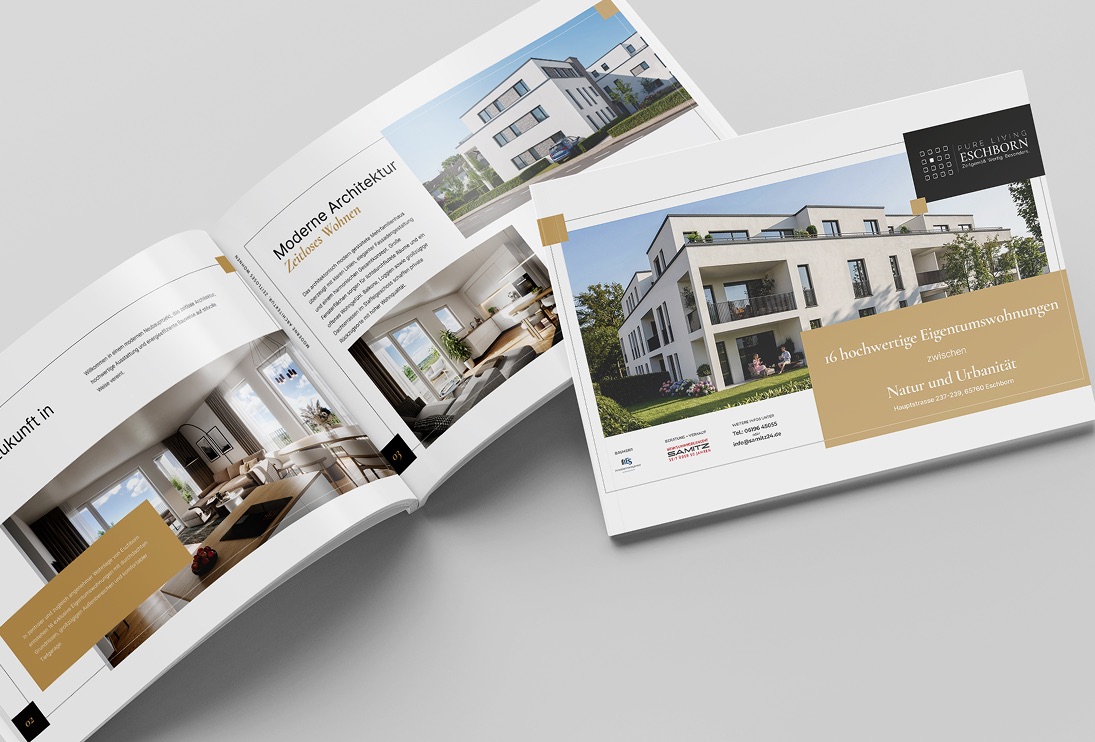
Producing Marketing Assets Across Every Channel
Creative production covers brand identity, real estate website design, 3D visualization, print marketing materials and digital ad creative in parallel rather than sequentially, so all assets share the same visual language and are ready to launch together instead of trickling out one channel at a time.
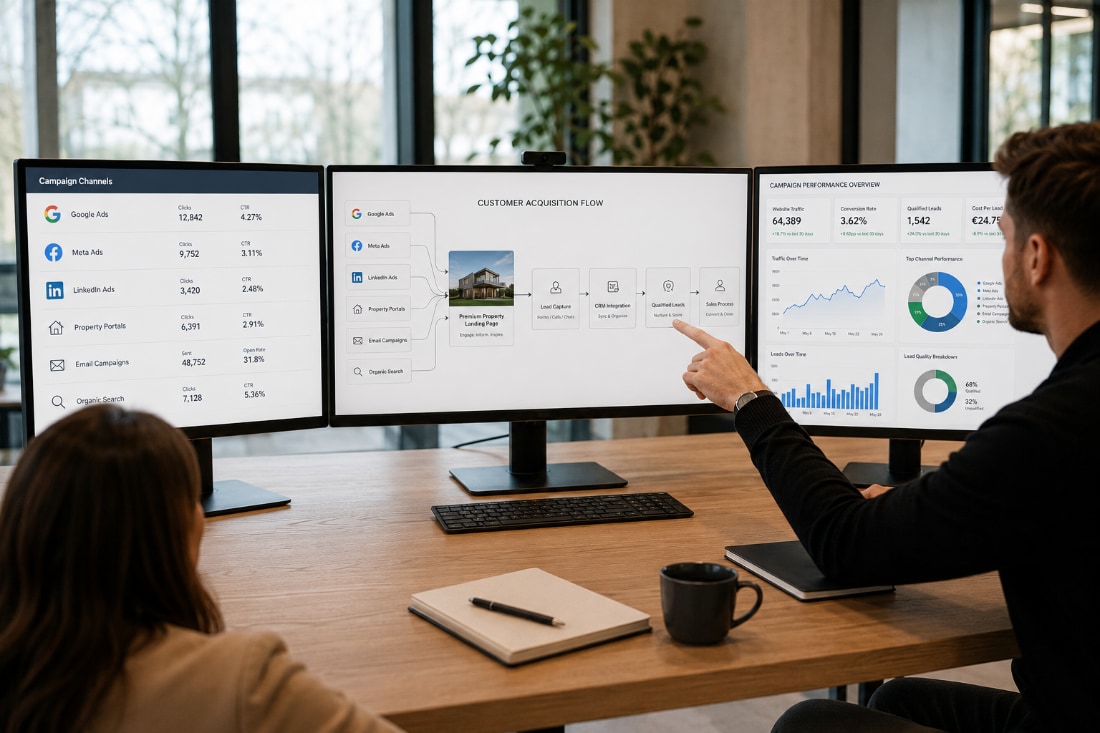
Launching Integrated Marketing Campaigns
Ad campaigns go live across search, social and display simultaneously, with landing pages, CRM tracking and email marketing sequences already connected before the first click arrives. This removes the gap between campaign launch and lead capture that costs most fragmented setups their best early traffic.
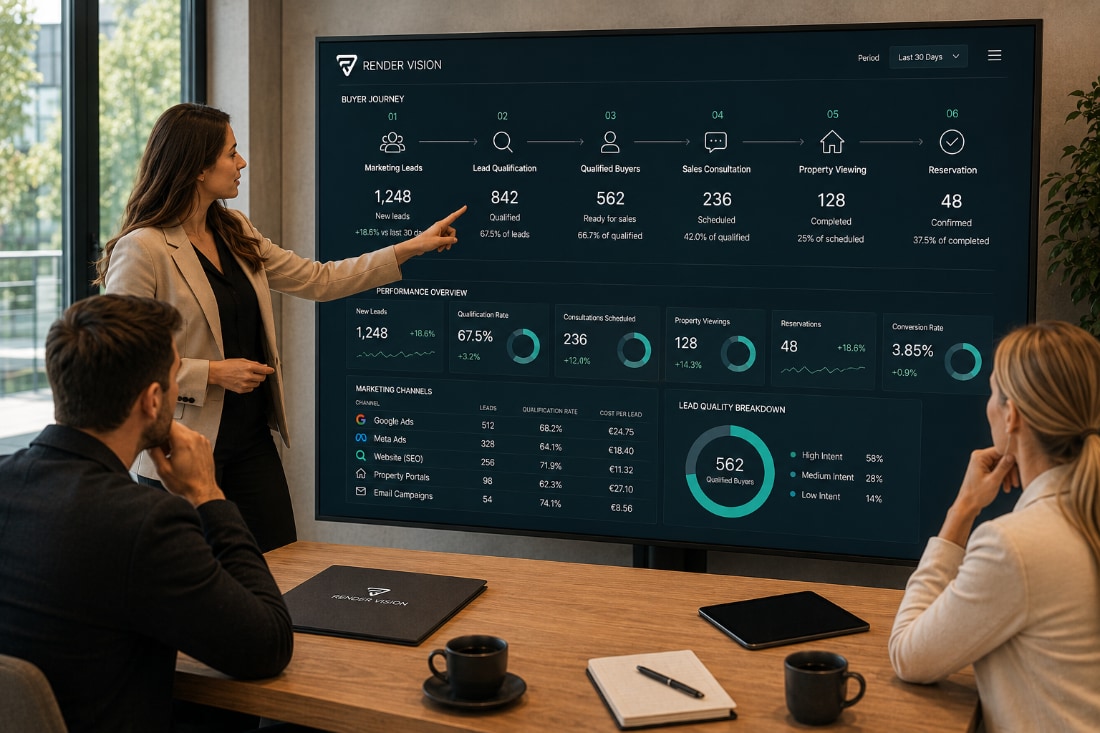
Generating and Qualifying Buyer Leads
Lead generation runs continuously through paid advertising, SEO optimization and remarketing, while automated lead scoring filters serious buyers from casual browsers before any contact reaches the sales team. This keeps the pipeline full of quality leads rather than raw volume that wastes sales capacity.

Measuring Performance and Scaling Results
Every channel feeds into a shared dashboard tracking leads, cost per qualified inquiry, pipeline movement and ROAS, giving the team and the client a single source of truth. Underperforming channels are adjusted or reallocated within the same reporting cycle, so marketing campaigns keep improving throughout the entire sales period rather than being reviewed only at the end.
Portfolio of Real Estate Marketing Projects
Completed projects across branding, websites, advertising and visualization show the system at work.
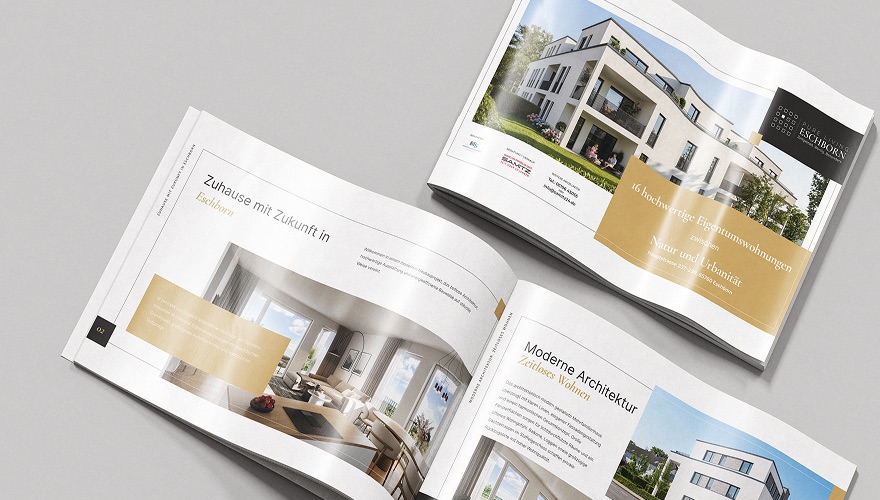
Property Branding Projects
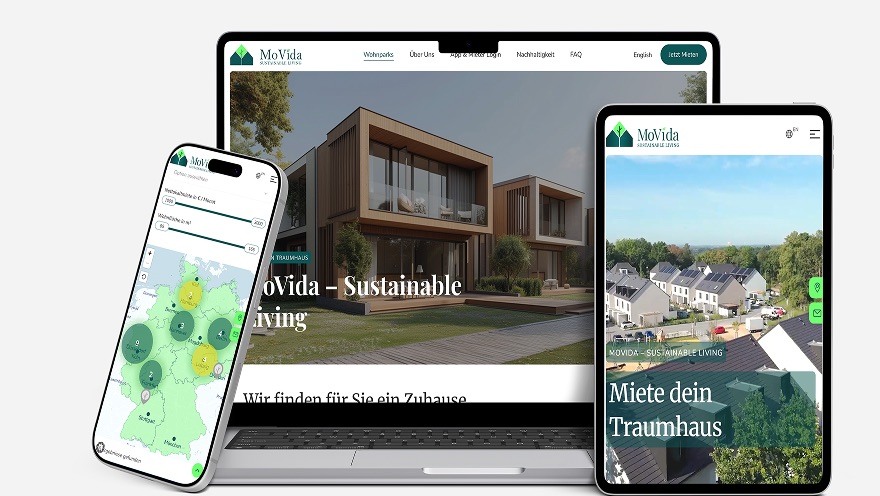
Real Estate Websites and Landing Pages
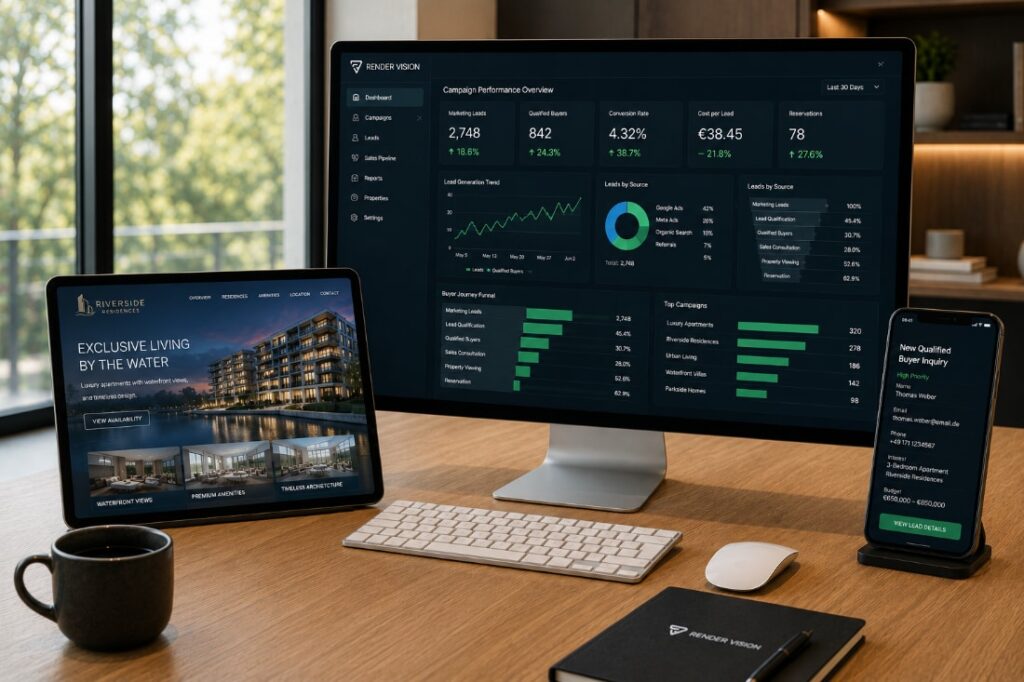
Advertising Campaigns and Lead Generation Systems
Architectural Visualization and Interactive Property Marketing


Who Benefits from Our Marketing Services for Real Estate
Eight types of real estate teams rely on this system for different reasons.
Developers Without an Internal Marketing Department
Developers Without an Internal Marketing Department
Developers without an in-house team — including small business owners running their first project — get every channel covered without hiring a full department.
Real Estate Businesses Expanding into New Markets
Real Estate Businesses Expanding into New Markets
Businesses entering a new market get localized campaigns instead of one template reused everywhere.
Real Estate Marketing Agencies Seeking White-Label Production Support
Real Estate Marketing Agencies Seeking White-Label Production Support
Real estate marketing agencies outsource production and 3D visualization under their own brand, white-label.
Property Managers Looking to Generate Leads Consistently
Property Managers Looking to Generate Leads Consistently
Property managers get a steady, predictable flow of quality leads instead of seasonal spikes and gaps.
Asset Managers Seeking Better Portfolio Visibility
Asset Managers Seeking Better Portfolio Visibility
Asset managers get consistent branding and reporting across every property in a multi-asset portfolio.
Brokers Building Independent Lead Generation Channels
Brokers Building Independent Lead Generation Channels
Brokers build their own lead generation channels instead of depending entirely on referral networks.
Marketing Managers Requiring Outsourced Execution Support
Marketing Managers Requiring Outsourced Execution Support
Marketing managers get hands-on execution support for campaigns their internal team can’t fully staff.
Sales Leaders Focused on Qualified Pipeline Growth
Sales Leaders Focused on Qualified Pipeline Growth
Sales leaders get a steady pipeline of qualified leads instead of inconsistent, hard-to-forecast demand.
Meet the Real Estate Marketing Experts Behind Every Project
Strategy, creative and technical specialists — the real estate marketing experts behind every campaign — work as one team, instead of separate departments handing work off to each other.
Strategy and Growth Specialists
Strategy and growth specialists lead market research, competitor analysis and positioning work before any creative asset goes into production, making sure every later decision rests on validated insight rather than assumptions about the local market.
Creative Team and Brand Consultants
Brand consultants and the creative team translate strategy into visual identity, messaging and 3D production, keeping branding, renders and marketing materials consistent across every channel a buyer might encounter throughout the campaign.
Web Development and Marketing Systems Experts
Web development and marketing systems experts build the websites, landing pages, CRM integrations and automation that keep leads moving from first click to signed contract without manual handoffs slowing the process down.


Flexible Real Estate Marketing Service Packages for Every Growth Stage
Scalable service packages match launch, growth and expansion objectives, so you engage at the level your marketing needs require today and scale as requirements evolve.
Launch
Package for New Property Developments
- Brand strategy & visual identity
- Property website development
- 3D visualization suite
- Launch campaign setup (Google & Meta)
- CRM integration & lead capture
- Print marketing package
Lead Generation
Package for Active Sales Campaigns
- Everything in Launch
- Full paid media management
- SEO & local search optimization
- Email marketing & nurture sequences
- Regular performance dashboards
- Lead scoring & sales handover
- LinkedIn lead generation
Growth
Package for Multi-Project Real Estate Brands
- Everything in Lead Generation
- Multi-market campaign management
- International buyer targeting
- Executive reporting & board decks
- Repeatable launch framework
- White-label production support
Real Estate Brands That Trust Render Vision




Frequently Asked Questions About Real Estate Marketing Services
How do you align marketing strategies with different property types and target audiences?
We begin every engagement with a market research and buyer profiling phase. For residential projects we map lifestyle drivers and emotional purchase triggers. For commercial and investment properties we focus on ROI metrics, yield projections and institutional buyer channels. Strategy is always tailored to the specific asset class, price point and market, shaping marketing strategies around what each property type needs.
Can your team support multi-location or international real estate projects?
Yes. We have active experience across multiple international markets and provide full localization of websites, ad copy, sales materials and CRM workflows. We build audience targeting and channel strategies specifically for international buyers, including multi-language landing pages and cross-border attribution models, so potential clients in each market feel like the campaign was built specifically for them.
How do you measure marketing performance beyond lead volume?
We track multi-channel attribution, cost per qualified lead, ROAS by channel, pipeline velocity, sales conversion rates and revenue contribution. Executive dashboards give stakeholders a clear view of performance at every funnel stage, from first impression to signed contract.
What marketing tools and reporting systems do you use?
We use Google Ads, Meta Ads Manager, LinkedIn Campaign Manager, Semrush, HubSpot, Pipedrive, Google Analytics 4, Looker Studio and custom reporting dashboards as our core marketing tools. Selection is adapted to client requirements and existing infrastructure.
How do you integrate marketing campaigns with existing CRM platforms?
We integrate with general platforms such as HubSpot and Pipedrive, real estate-specific systems including Propstack, onOffice, FLOWFACT, Follow Up Boss and kvCORE, and custom CRM systems. Lead scoring models, pipeline stage definitions and automated handover workflows are configured during onboarding and refined based on sales team feedback.
Can you work alongside our internal sales or marketing department?
Yes. Many of our clients have internal teams. We define clear ownership boundaries, integrate with existing workflows and adapt our reporting to match internal KPI frameworks, scoping the company’s services around what your team still needs. We function as an extension of your team, not a replacement.
What is your process for launching a new real estate development?
We follow a structured five-stage process: market research and positioning, brand and creative production, technical infrastructure setup (website, CRM, tracking), campaign launch and continuous optimization. First leads typically start arriving within the initial weeks of a launch.
How do you maintain brand consistency across multiple marketing channels?
All creative — digital ads, print, website, 3D visualization, social content, email — is produced by the same in-house team using a shared brand system. This eliminates the visual inconsistency that arises when multiple vendors produce assets independently.
What makes your approach different from other marketing agencies serving the real estate industry?
We combine specialist creative production (3D visualization, architectural animation, print) with performance marketing (paid media, SEO, CRM automation) inside a single integrated team serving the real estate industry. Most other marketing agencies specialize in one or the other. We are accountable for leads and pipeline, not just impressions and brand awareness.
How do you adapt marketing systems as market conditions change?
We run regular performance reviews and strategy check-ins tied to market data. Channel allocation, creative messaging and audience targeting are adjusted in response to changes in buyer sentiment, interest rate movements, local market supply and competitive activity.


 powered by Borlabs Cookie