


How AI
IS TRANSFORMING ARCHVIZ

Sales in a new residential development often start while excavators are still working on site. Buyers and investors need to see a building that does not exist yet, while the marketing team has only drawings and a campaign launch date. AI architecture rendering helps move faster from plans to first visuals: test several directions, show them to stakeholders and approve the concept before final production begins. Speed alone does not sell, though. Final images must be accurate, consistent and create the desire to buy. This article explains at which campaign stages AI rendering saves time, where professional control remains essential and how Render Vision combines both approaches in one architectural visualization workflow.
How AI Rendering Speeds Up Real Estate Marketing for Developers and Agents
AI adoption in real estate marketing is still in its early stages. In the July 2025 NAHB/Wells Fargo Housing Market Index survey, most U.S. single-family builders did not use AI at all. Among those who did, advertising and marketing materials ranked first at 20%, followed by market analysis and project planning at 11%. The remaining ten business functions each stayed below 5%. Builders not yet using AI also rated marketing materials as the most likely area for adoption within the next two years. JLL Research describes the effect of AI on work through three forces: role augmentation, selective displacement and job creation. For AI architectural rendering the first model fits best: AI accelerates the search for options while architects, art directors and marketing leads keep decisions and final approval.
Render Artificial Intelligence vs. Traditional Rendering Turnaround
Turnaround is where the difference shows first. Based on timelines published by visualization studios, a traditional rendering project takes on average 2 to 10 working days per image, from a small interior to an aerial view of an entire district. Revision rounds come on top of that. AI tools change the picture at the idea stage: in an international survey of more than 1,000 architects and designers conducted in November 2024, 44% said they use AI for concept images and early design ideas while 35% use it for quick design variations. A draft appears almost as soon as the input image is uploaded, so teams that render artificial intelligence concepts can compare several visual directions within one day. A classic render engine pipeline is still needed for final materials that require full geometry control.
Faster Concept Development Before Final 3D Production
Concept development used to wait for a finished 3D model. AI architecture rendering changes that order. A massing study, a sketch or a single reference image already gives AI models enough material to generate images, so mood, materials and lighting can be discussed before modeling starts. Early concept exploration produces mood boards that the art director, the visualization specialist leading the project, translates into a precise brief for the 3D artist. As a result, fewer questions remain open when design development begins and the schedule contains fewer revision loops.
From One Design Direction to Multiple Marketing Variations
A single architectural design can be shown in several finish options before the final one is chosen. With AI rendering architecture teams can compare facade cladding, landscaping, roof color or interior styles on exactly the same building. A developer can, for example, see light brick next to dark metal and pick the option that best matches the project’s positioning. Only the approved variants move into final production, so every image reflects the same design intent.

AI Architectural Rendering Across the Real Estate Marketing Workflow
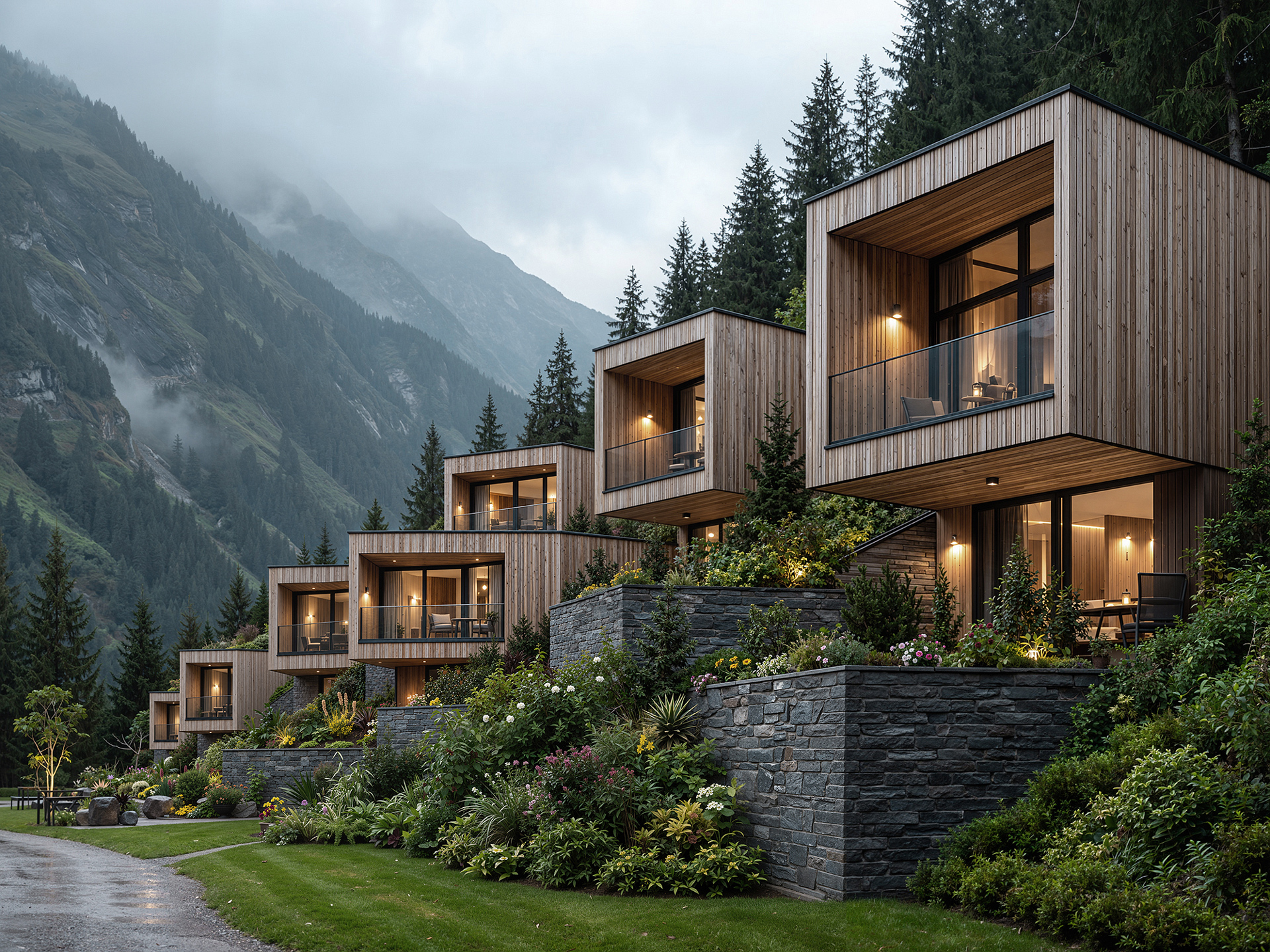
Real estate media production is becoming faster and better connected. In May 2026 the National Association of Realtors (NAR) described platforms where AI tools work alongside human editors to cut turnaround time without sacrificing quality. Pre-construction marketing can follow the same logic: AI accelerates the early stages while professional control protects the accuracy of the final materials.
AI Rendering Architecture for Early Design and Marketing Decisions
Early decisions in the design process shape the budget of the entire campaign. Before a developer approves the final set of camera views, AI archviz helps answer practical marketing questions: which facade should lead the hero image, which project features deserve the spotlight (a lobby, a rooftop terrace or a courtyard) and which time of day best conveys the character of the place. The answers determine how many images to commission and which of them will carry the advertising. Changing a decision at this stage costs far less than reworking a finished 3D scene.
Turning Project Plans and 3D Models into Marketing Visuals
Most projects already have digital data from established architectural workflows. Architects work in BIM or CAD software, so a BIM model, a CAD export, a floor plan or a simple massing 3D model can serve as the input image for AI. The input type determines how well the result holds its form: a clean 3D model fixes proportions and camera angle while a hand sketch gives AI more room for interpretation. Some AI rendering software connects to design software through a BIM plugin or direct integration, so architects keep their existing BIM workflow. The more precise the input, the fewer revisions later stages require.
Professional AI Rendering vs. DIY AI Rendering Tools
Self-service AI visualization is now within reach of any team. Most tools run as a web app with per-image pricing or subscriptions that include unlimited renders. Some combine generation, editing, upscaling and video in one platform. Most architectural rendering AI platforms are built for teams willing to experiment on their own, so it makes sense to test AI rendering tools on a single project first. Once images reach buyers and investors, the subscription price matters far less: with AI architecture rendering the real question is who carries responsibility for the final result. Below are five differences between working with AI in-house and working with a professional studio.
Faster Results Without the AI Learning Curve
Every platform has its own prompts, settings and quirks. Mastering them takes time that marketing teams rarely have. A professional studio already knows which AI models handle facades, interiors or landscaping best, so the whole team receives usable concept images without manual setup.
Better Control Over Architectural Details
Generic AI renderings often drift: window counts change, balconies merge and the facade rhythm loses its logic. Professional 3D artists check proportions against the drawings and correct deviations in the 3D scene. Geometry stays faithful to the architect’s plans instead of the model’s guess.
Consistent Quality Across the Entire Project
A campaign often needs dozens of images for the same project. DIY tools generate each image independently, so light, materials and camera logic vary from view to view. One art director keeps image quality and presentation quality consistent across the full set.
Professional Rendering Without Building an In-House Workflow
An internal pipeline means software licenses, paid seats, training and review routines. An external studio does the same job inside an established process. Developers keep one contact, one schedule and one quality standard instead of rebuilding their existing workflow around several rendering tools.
Combining AI Speed with Professional 3D Rendering
The two methods complement each other rather than compete. Quick AI generations shorten the exploration phase, often directly within the client’s team and its design workflow. Final images then follow one of two professional routes. The first is a multi-stage AI pipeline with extensive testing and selection. The second is full 3D production, chosen when exact geometry and later changes matter. Artificial intelligence rendering at this level is not instant, but it delivers high quality renders that stay true to the approved concept.
AI Rendering Risks for Property Marketing
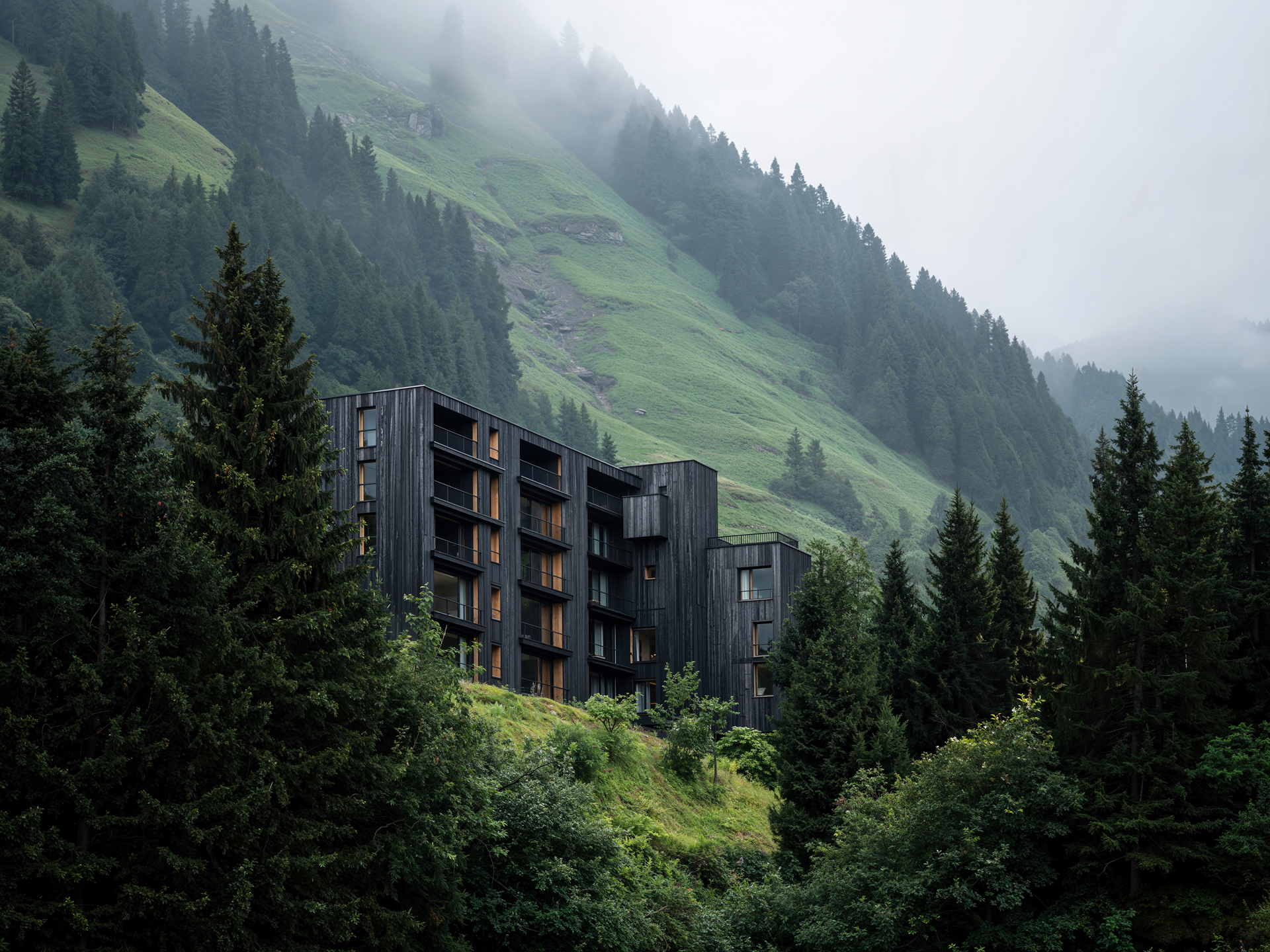
Every property visual produced with AI architecture rendering needs a review gate before publication. California made this explicit: as of January 1, 2026, licensees must clearly disclose digitally altered images that change the appearance of a property and make the original image available. The DRE advisory adds that responsibility for inaccurate AI output stays with the licensee and the broker rather than the technology provider. The rule targets altered photos of existing homes, yet the same accuracy standard is a sound benchmark for pre-construction renders. A structured check of geometry, materials, views, landscaping and fixtures turns this requirement into a routine quality step.
Protecting Architectural Accuracy and Design Intent
AI models predict what an image should look like; they do not read construction drawings. For marketing this is more than a technical detail. When a visual departs from the project, the architect sees the design intent distorted, approval boards receive a misleading picture and a buyer who compares the advertising with the finished home loses trust in the developer. Accurate final images therefore protect both the architect’s design intent and the reputation of the project.
Maintaining Brand Consistency Across Campaign Assets
A development brand depends on recognition. If the hero image shows warm oak and the social ad shows grey stone, buyers notice the mismatch. The brochure, website, site hoarding and sales gallery should tell one story. That requires a fixed reference set: approved materials, color temperature, camera heights and the level of interior styling. The most practical approach is to capture these in a visual style guide for the project that defines acceptable lighting and how many lived-in details to show, such as a folded blanket or an open book. Every asset then stays on brand, whether it started as an AI concept or as a full 3D scene.
Avoiding Misleading AI-Enhanced Property Visuals
Marketing images may idealize the atmosphere but not the facts. The line is crossed when an image promises something the buyer will not receive: a different window view, a more spacious room or landscaping that will not exist at handover. NAR notes that scrutiny of listing photo accuracy is increasing, including in California and Wisconsin. New tools also let buyers compare original and enhanced photos.
Rights to source images are a separate risk. Before a photographer’s images are enhanced with AI, the photographer’s permission is required. The same applies to renderings: if a studio’s finished images serve as input for AI editing or new generations, that use should be covered by the contract. In addition, some AI services reserve the right to display images publicly on free or entry-level plans, which matters when a project has not yet been announced.
For pre-construction campaigns a visible artist’s impression note and documented client approvals keep every visual transparent.
Architecture AI Rendering for Real Estate Marketing Assets
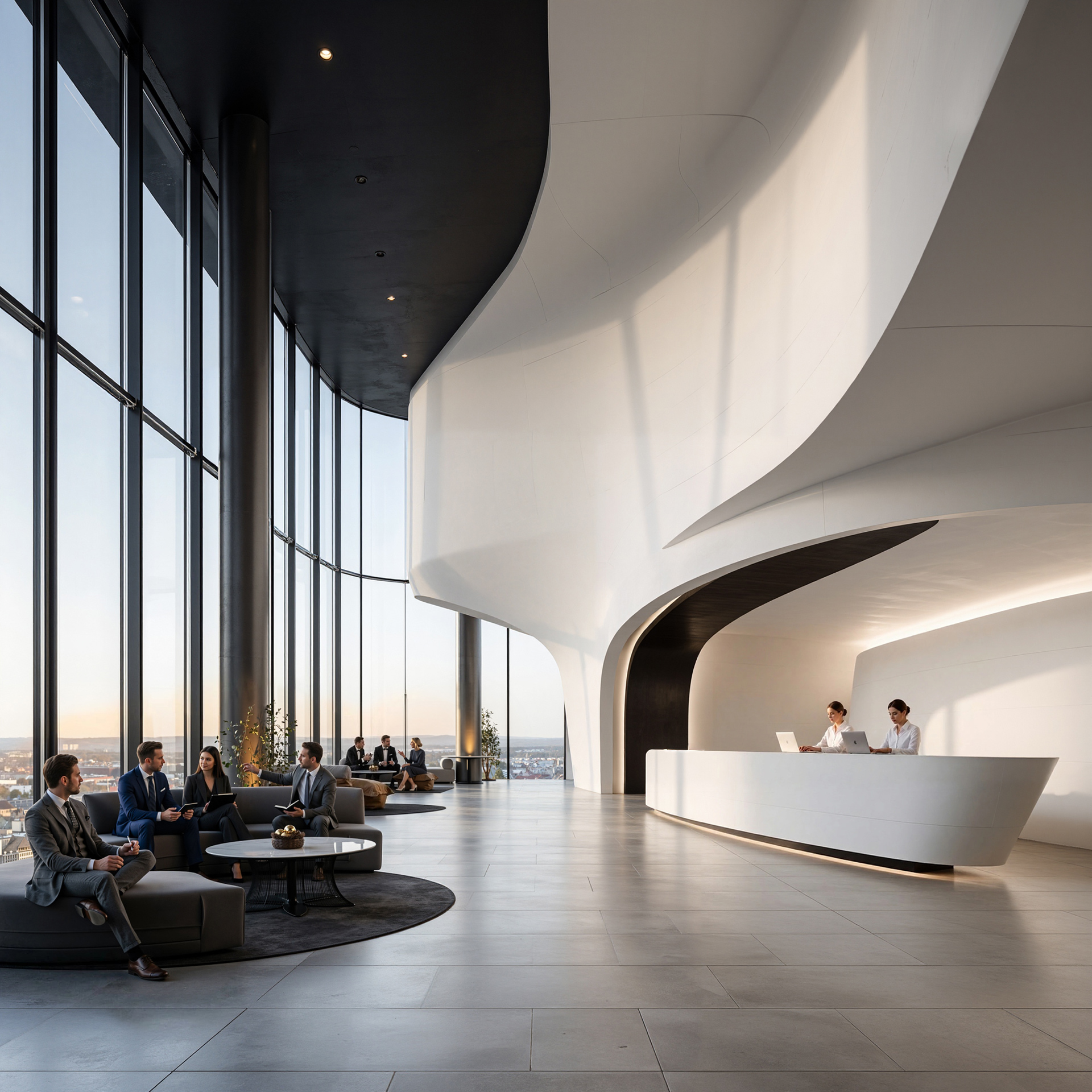
Buyers choose property online: according to Zillow’s 2025 report, 67% of prospective U.S. buyers had already viewed homes on real estate websites. Asked about the most important listing feature, 33% named floor plans, 26% high-resolution photos and 20% 3D or virtual tours. Only 4% put video first. For an unbuilt project one hero image is therefore not enough: it needs a coordinated package of floor plans, still images and interactive views. Architecture AI rendering speeds up only part of this work: it helps define the visual direction quickly and prepare image variants for testing. At present AI models still produce many distortions and inaccuracies in proportions, layouts and details. Floor plans and tours are therefore built on an accurate 3D model of the project.
AI Renderings for Listings, Advertising and Pre-Launch Campaigns
Each channel gives AI a different role. In some channels quick AI generations are enough. In others accuracy matters more: quick generations serve only as ideas. One rule applies everywhere: an image that betrays its AI origin through unnatural textures, people or details can harm a campaign more than it saves in time. The same applies to any image that departs from the real project. Below is where that line runs across real estate marketing channels: listings, advertising, pre-launch materials and variations for different audiences.
Property Listing Images for New Developments
In a listing, buyers compare units and decide whether to book a viewing. Quick AI generations help here at most with choosing a presentation style. Final images must match the layouts, finishes and window views stated in the sales documents; otherwise the mismatch surfaces in the sales gallery or at closing. That level of accuracy comes from a professional studio that checks every image against project data, delivering photorealistic visuals buyers can rely on.
Real Estate Advertising and Paid Campaign Visuals
Advertising is where AI helps most. Fast AI renders let marketing teams prepare several creatives for testing and then take the best-performing one to final quality. A noticeable AI look (plastic textures, strange people, distorted details) cheapens the image of the project. Leads won by an inaccurate picture are lost at the viewing. A professional team selects and refines the variants so that even a test creative looks credible and matches the project.
Pre-Launch Visuals Before Construction Is Complete
Before sales start, interest has to be built in a home that does not exist yet. AI helps create early atmospheric images at the concept design stage: the mood of the neighborhood, the light, the character of the place. Anything specific, however, whether a layout, a view from the terrace or courtyard amenities, is something buyers will remember at handover. Such images should therefore be created professionally from the approved project and agreed with the developer before publication.
Campaign Variations for Different Audiences and Channels
A young family and an institutional investor look for different things in the same building. AI makes it quick to adapt interior style, season or furnishing for each audience. The risk is that the architecture starts to drift along with the mood, so audiences see what looks like different buildings. A professional studio keeps the architecture identical across all versions and changes only the presentation.
Architectural Rendering AI for Property Sales and Investor Presentations
Investors and buyers make decisions differently. An investor needs to grasp the concept and the economics of the scheme quickly, while a buyer wants to imagine living in the future home. For both audiences, visuals must communicate design intent clearly, because every deviation from the project turns into a question of trust. Strong design communication shortens the path from presentation to decision.
Quick Concept Visuals for Stakeholder Reviews
Internal reviews do not need final quality; they need fast answers. This is where AI fits naturally: quick concept visuals help developers, architects and brokers agree on a direction in fewer meetings, before any production budget is spent. Ideally, such images should stay within the team rather than circulate as finished materials.
Presentation-Ready Visuals for Developers and Investors
Investor presentations demand a different standard. Photorealistic renders appear on large screens and in printed brochures at high resolution, up to 5K, where any AI error is immediately visible. Stunning visuals alone do not secure funding; convincing ones do. Such materials are best entrusted to a professional studio that has built its own AI production pipeline and takes responsibility for the accuracy of every frame.
Sales Materials That Explain the Unbuilt Property
Buyers of off-plan units decide on the basis of documents and images. Their questions are specific: how much light reaches the living room, what can be seen from the bedroom window, whether a dining table will fit. The brochure, floor plans and interior renders answer these questions when all of them are built on the same verified project data. An AI image that answers them inaccurately creates a promise the developer will later have to explain.
How Render Vision Approaches AI Architecture Rendering for Real Estate Campaigns
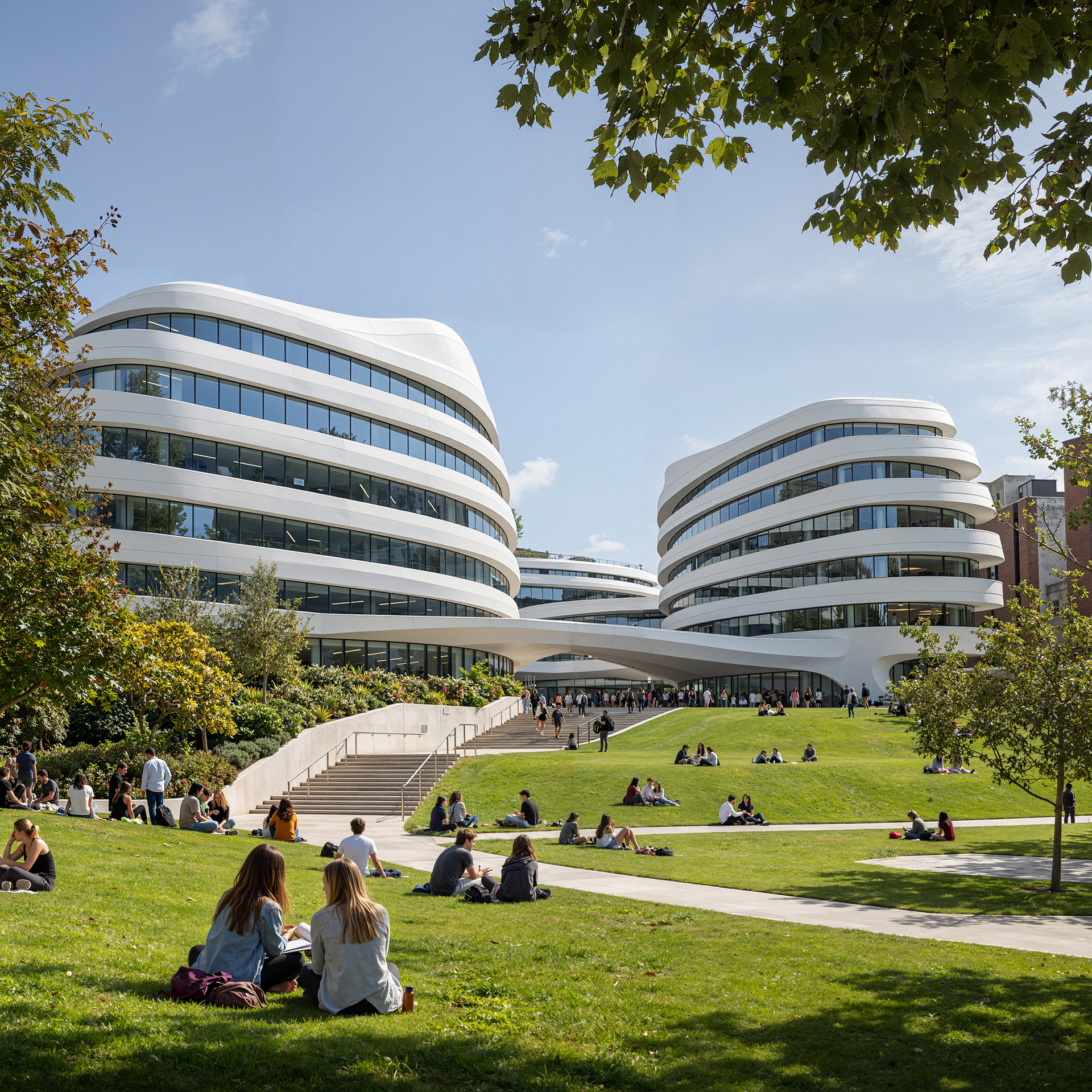
This section describes how Render Vision organizes design visualization for campaigns when AI is part of the process. With AI architecture rendering the process stays the same for developers, brokers and marketing agencies; only the image set and the production route change.
The Marketing Challenge and Visual Requirements
Every project starts with a brief. The studio replies to an inquiry within 1 to 3 hours and assigns at least three people from the start: a project manager, an art director and a 3D artist. At the outset the team collects the source data (a BIM or CAD model, floor plans, reference images) and defines the campaign goals: which channels the images will serve and where absolute accuracy matters. The production route, professional AI visualization or full 3D production, is agreed with the client when the project is ordered. The price is fixed when the project is approved and changes only if the client significantly expands the scope.
Using AI to Explore Visual Directions
If the client’s team already has quick AI generations, they become a convenient starting point for the conversation about style. If not, the studio sketches its own directions. In both cases the art director proposes several options for mood, materials and time of day. The client compares them and selects those that move into production. With AI support the discussion is built on concrete images rather than abstract descriptions.
From Approved Direction to Final Images
The approved direction then moves into production. In the professional AI pipeline an image goes through extensive testing, selection and several rounds of optimization and checks. In the 3D pipeline an artist builds the scene from project data. In both cases every image is checked against the project and the client makes revisions in two rounds. Finished images are delivered as JPG or PNG files at up to 5K resolution, animation in Full HD or 4K.
Measuring Marketing Production Time Savings
Time savings are best measured not in days per image but in time to campaign launch. Key indicators are the number of days until the visual direction is approved, the number of revision rounds and the moment the first materials go into advertising. Render Vision benchmarks: professional AI visualization takes up to 3 to 4 business days, while a full 3D cycle typically takes 10 to 14 days from brief to final images. The main gain comes from making visual decisions before production starts, so final production runs without changes in direction.
Beyond Static AI Renders: Expanding Real Estate Visual Content
A campaign rarely ends with still images. Video, interactive tools and immersive formats let buyers experience an unbuilt development in motion and at their own pace. Each format sets its own requirements: AI handles some of them well, while others still depend on a precise 3D base.
AI-Assisted Video for Real Estate Marketing
Video generation is the newest capability of AI tools. Current models can turn an input image into a short camera move or an atmospheric clip, which is enough for social media teasers and early concept tests. When an image is simply animated with a single service, longer sequences still drift: facade and interior details shift from frame to frame. Viewers notice. Professional studios solve this with their own pipeline that combines several tools and extensive testing. The source can be a static 3D render or an AI-generated image, while shots that AI cannot yet handle are animated in 3D. The right route depends on the task: a film based on a 3D model can be changed and refined later, while video created from a purely AI-generated image is faster but cannot be moved into 3D afterwards.
Turning 3D Project Assets into Multiple Visual Formats
One approved 3D model can become the base for many formats: still images for the brochure and client presentations, aerial views, animation frames and interactive scenes. This is the main advantage of a professional 3D base: it does not have to be rebuilt for each new format. Design changes are made once and carried into every material. Static renders remain the backbone of the campaign while the other formats extend its reach.
Interactive and Immersive Experiences for Property Marketing
Interactive formats let buyers explore a project at their own pace. The Render Vision Apartment Viewer, for example, is configurable sales software that shows the real-time status of every unit as available, reserved or sold. Buyers rotate an interactive model of the building and select units directly on it. 360 virtual tours are likewise assembled from static panoramic renders and let buyers look around key rooms directly in the browser. When a fully interactive real-time scene is needed, it is built with WebGL, WebGPU or Unreal Engine. VR walkthroughs are created in a separate dedicated production process for showrooms and sales events. Quick AI generations do not help here: every view of the building and every panorama must show exactly the same geometry.
Adapting AI-Generated Visual Content for Different Digital Platforms
Each platform follows its own format logic. Listing portals need landscape images while Instagram and TikTok favor vertical formats. Email campaigns and print require their own sizes and resolution. NAR describes how a single listing can be adapted into flyers, social posts, emails and open house materials with design templates and AI tools. AI tools genuinely speed up this kind of adaptation through reframing, background extension and upscaling. The source, however, should remain the approved project images, so that reframing and background extension never alter the architecture.

AI Architecture Rendering FAQ
Can AI rendering create visuals from a real estate floor plan?
Yes, AI tools can turn a floor plan into an atmospheric interior or exterior impression. The result is an interpretation: AI invents ceiling heights, windows and finishes on its own. Even when AI receives elevations or a 3D model as input, accuracy is not guaranteed. Such images are useful for exploring ideas. For sales documents this kind of AI architecture rendering is not reliable enough.
What input type works best for AI architectural visualization?
The best results come from a complete package: a 3D or BIM model, floor plans, elevations and a set of reference images for materials and mood. The model fixes the geometry while the references set the style. If no model exists yet, sketches or site photos will do, but the result is then suitable only for exploring ideas.
Can AI rendering generate video for real estate marketing?
Yes, AI can already turn a single image into a short clip. The result is unstable, however. Such a video usually goes through several iterations before publication. A clip for a campaign is therefore better created in a professional AI pipeline. If it will have to change along with the project, it should be built on a 3D model.
How do AI models handle existing project images and reference images?
AI models use existing project images and reference images as guides for style, light and materials. They do not copy geometry precisely, so the result can drift from the source. The clearer the references and the stricter the review, the closer AI renderings stay to the intended architectural design.
Can AI rendering preserve the exact appearance of a real estate property?
Not with certainty: AI does not offer full control over the result. A model can quietly change window proportions, materials or landscaping, so every AI render architecture teams publish should be checked against the property or the approved plans.
Do AI rendering tools require a paid plan for commercial projects?
In most cases yes. One popular service, for example, states that commercial rights and watermark-free images are available only with an active paid plan. Team plans add a shared workspace. License terms should be checked before images are used in a campaign.
Can a real estate marketing team use AI rendering without training AI models?
Yes. Commercial platforms run on pretrained AI models, so no team needs to train AI models of its own. The real effort goes elsewhere: the learning curve of prompting, quality checks and a consistent brand style.



Ready for a New View?
Contact Us to Receive a Free Quote


 powered by Borlabs Cookie