


3D Swimming Pool Rendering:
for Real Estate Marketing and Pre-Sales
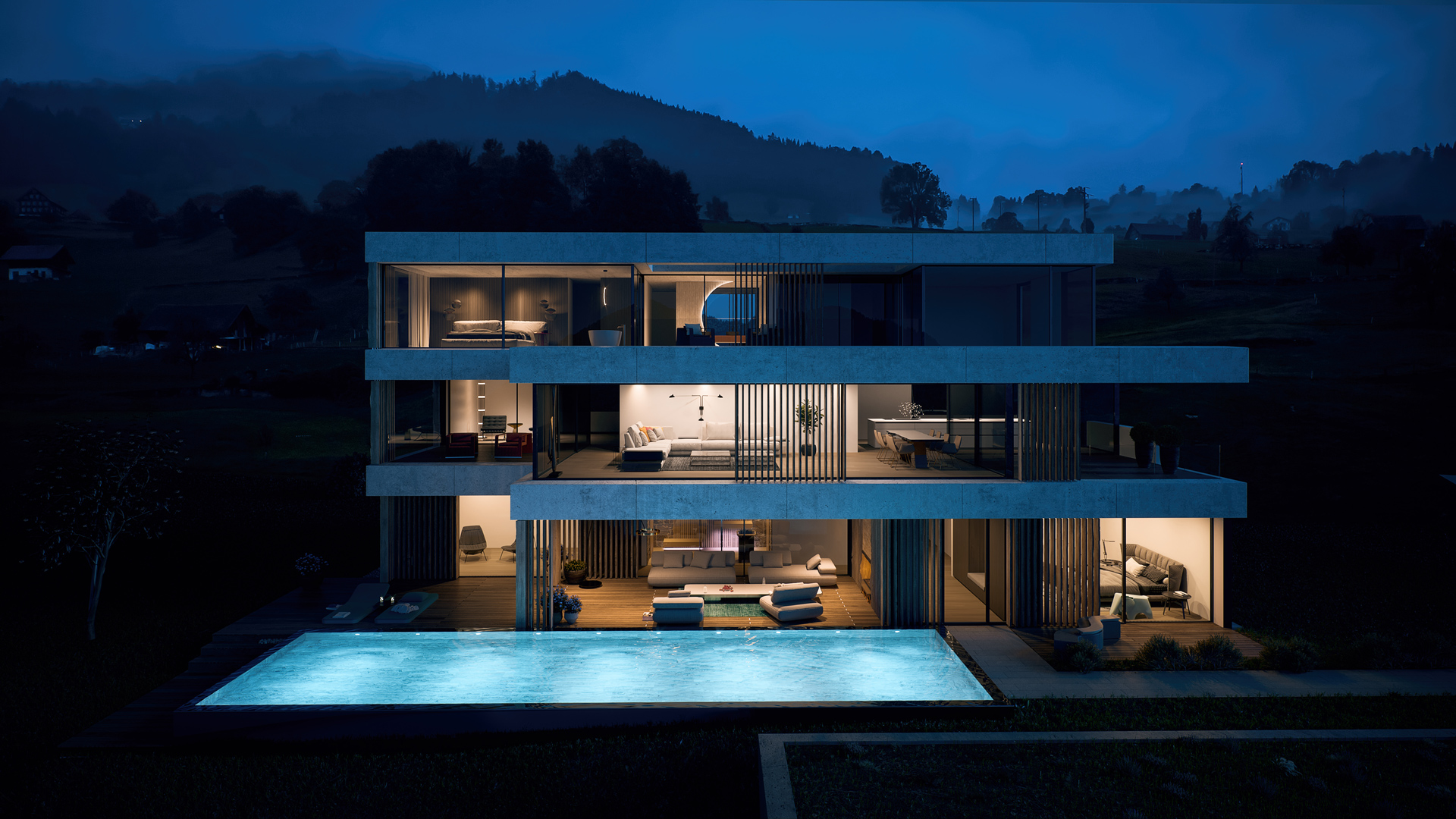
A swimming pool is one of the hardest amenities to sell before it exists. Water, light and materials only read as premium once a buyer can actually see them, which is exactly what 3D swimming pool rendering is built to solve. Instead of waiting for tile, coping and landscaping to go in, development and marketing teams can put a finished, photorealistic pool in front of buyers, investors and approval boards the moment the concept is locked. This article walks through how 3D pool design supports faster decisions, what a controlled production process looks like, how finished visuals get used across sales and marketing, and where pool rendering projects most often go wrong.
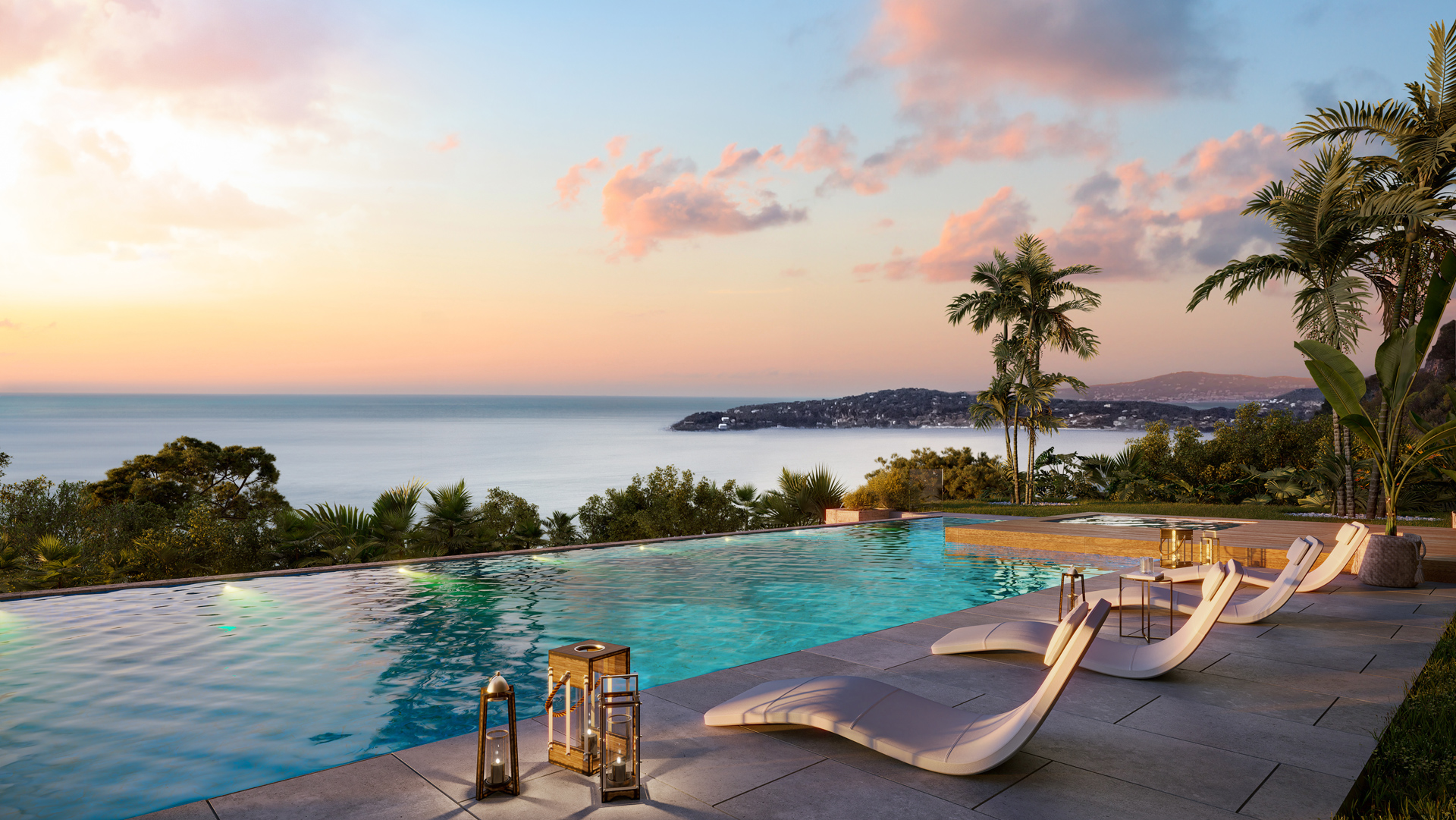
3D Pool Design Speeds Presales Decisions
Buyers and stakeholders commit faster when they can see a finished space rather than imagine one from a floor plan or a mood board. A well-rendered pool adds a significant role in how the wider property is perceived, often well before construction is finished.
Pool 3D Design Clarifies Buyer Decisions
A construction drawing tells a buyer where the pool sits. It does not tell them how the water will catch the afternoon light or how the deck will feel next to palm trees and landscaping. Pool 3D design closes that gap by showing the amenity as a finished space, with accurately represented materials, realistic lighting and correct proportions, so a prospective buyer can form an opinion in minutes instead of guessing from technical drawings.
3D Swimming Pool Visuals Align Development Teams
Circulating 3D swimming pool visuals early turns separate ideas into one shared reference image that every stakeholder can react to, comment on and approve, which helps shorten internal review cycles and keeps design intent and sales messaging aligned around the same proposed finished space.
3D Pool Renderings Reduce Approval Rework
Design boards and investment committees can review materials, scale and lighting visually instead of relying on specifications alone. Circulating 3D pool renderings ahead of a formal review can surface objections while changes are still relatively inexpensive, helping to keep the approval process moving and potentially reducing late-stage revision rounds before public launch.
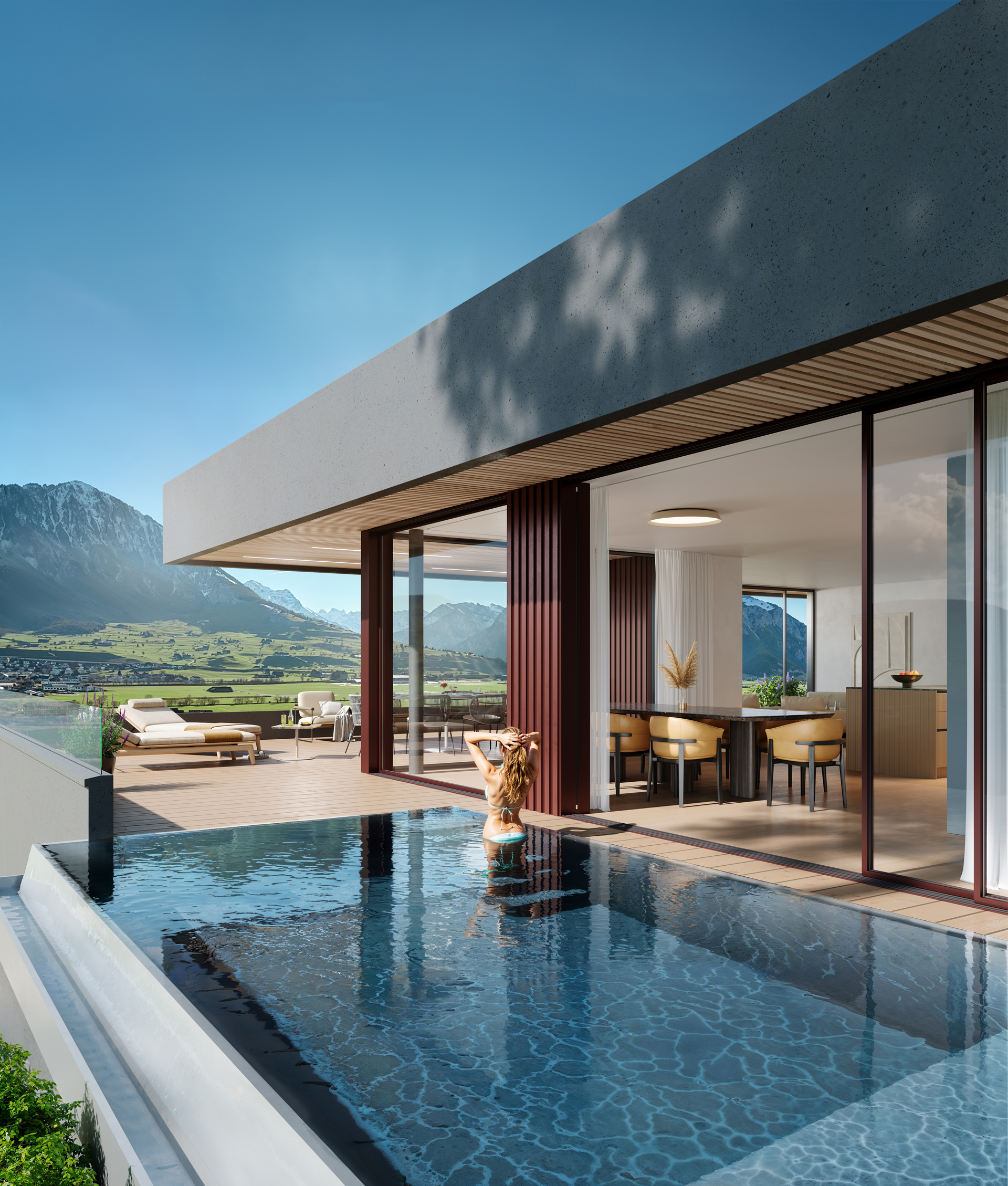
3D Swimming Pool Visualization Production Process
Good 3D swimming pool visualization follows a controlled sequence, not a single rendering pass, so architects and product teams can catch inconsistencies while they are still cheap to fix.
Modeling Pool Geometry, Materials, and Finishes
Production starts with architectural inputs: pool geometry, deck layout, elevation data and the surrounding building context where relevant. From there, the team builds out materials – concrete shells, tile, stone coping and any custom finishes – so that texture, scale and quality read correctly at any camera distance before water, lighting or landscaping enter the scene. A smooth surface finish on coping and deck areas is modeled separately from textured stone accents, since the two need different lighting treatment later.
Rendering Realistic Water, Reflections, and Lighting
Water is one of the hardest surfaces to render convincingly, so this stage often requires careful iteration. The swimming pool render needs to combine a reflective surface with correct light behavior, since water that looks plastic or flat undermines an otherwise strong composition instantly.
Caustics and Refraction for Believable Water
Caustics – the shifting light patterns cast by water onto the pool floor – and refraction through the water column are what separate a believable 3D swimming pool from a generic one. Getting these right requires physically accurate lighting engines, not simple transparency tricks, and plays an important role in making rendered water feel convincing.
Night Renders With Underwater Accent Lighting
Evening scenes rely on underwater lights to carry the composition, since ambient daylight is gone and the illuminated water becomes one of the dominant visual elements. Balancing underwater lights against deck lighting and sky tone takes a separate lighting pass, and it is often requested for marketing material aimed at showcasing a property’s evening amenity experience.
Reflective Tiles and Time-of-Day Accuracy
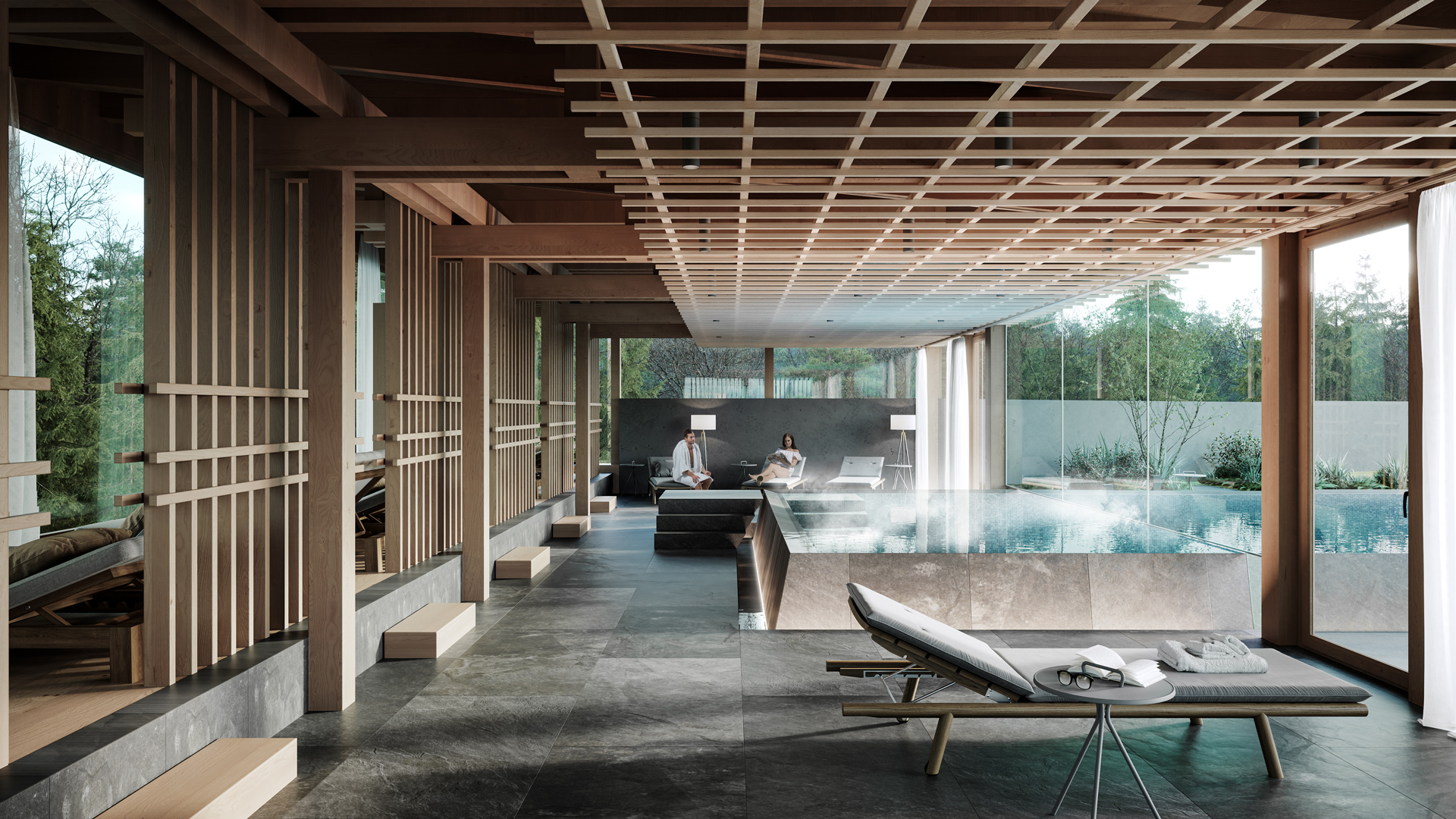
A reflective surface on tile or coping changes completely between morning, midday and sunset, so time-of-day has to be locked before final lighting begins. Accurately matching reflections, water appearance and surrounding materials to the sun angle helps give the finished image its natural beauty rather than an artificial, over-lit look.
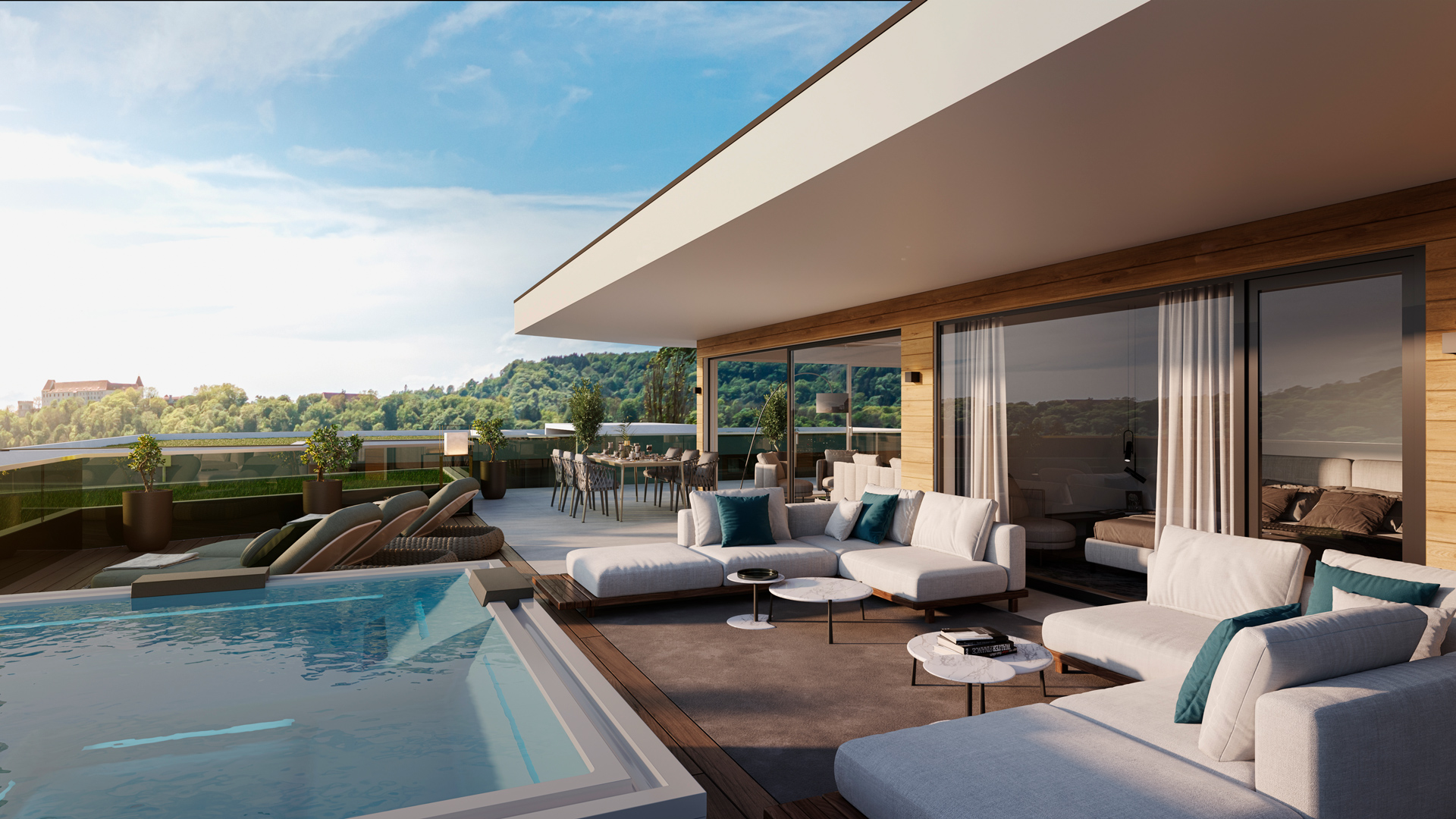
Using 3D Pool Renderings in Marketing and Sales
Once approved, a single render set can carry a pool amenity across presales, investor materials and campaign assets without fragmenting the project’s visual language.
How One Swimming Pool Render Sells the Whole Amenity
A strong swimming pool render does more than document a design – its job is to create desire before the concrete is poured. One well-composed hero image, built around natural beauty and a clean camera angle, can carry a landing page, a brochure and a sales deck at once, keeping every touchpoint consistent with the same finished space.
3D Pool Designs for Investor Presentations and Stakeholder Approvals
Investors and stakeholder committees evaluate commercial projects not only on numbers but also on perceived value, and finished 3D pool designs give them something concrete to react to. A render set built for this audience typically includes a hero shot, a detail composition and a context view showing the pool within the broader property, so the amenity reads as part of a complete offering rather than an isolated feature.
Virtual Tours and Animation: Let Clients Walk Through the Space
Where a still image sets the mood, animation guides viewers through a planned sequence, while a virtual tour lets clients explore the space interactively, following the deck line, the water edge and the surrounding landscaping. These formats are produced as dedicated deliverables rather than an automatic extension of the still renders, since navigation, camera paths, timing and pacing require their own planning depending on the format.
Cutaway and Detail Views for Investor Due Diligence
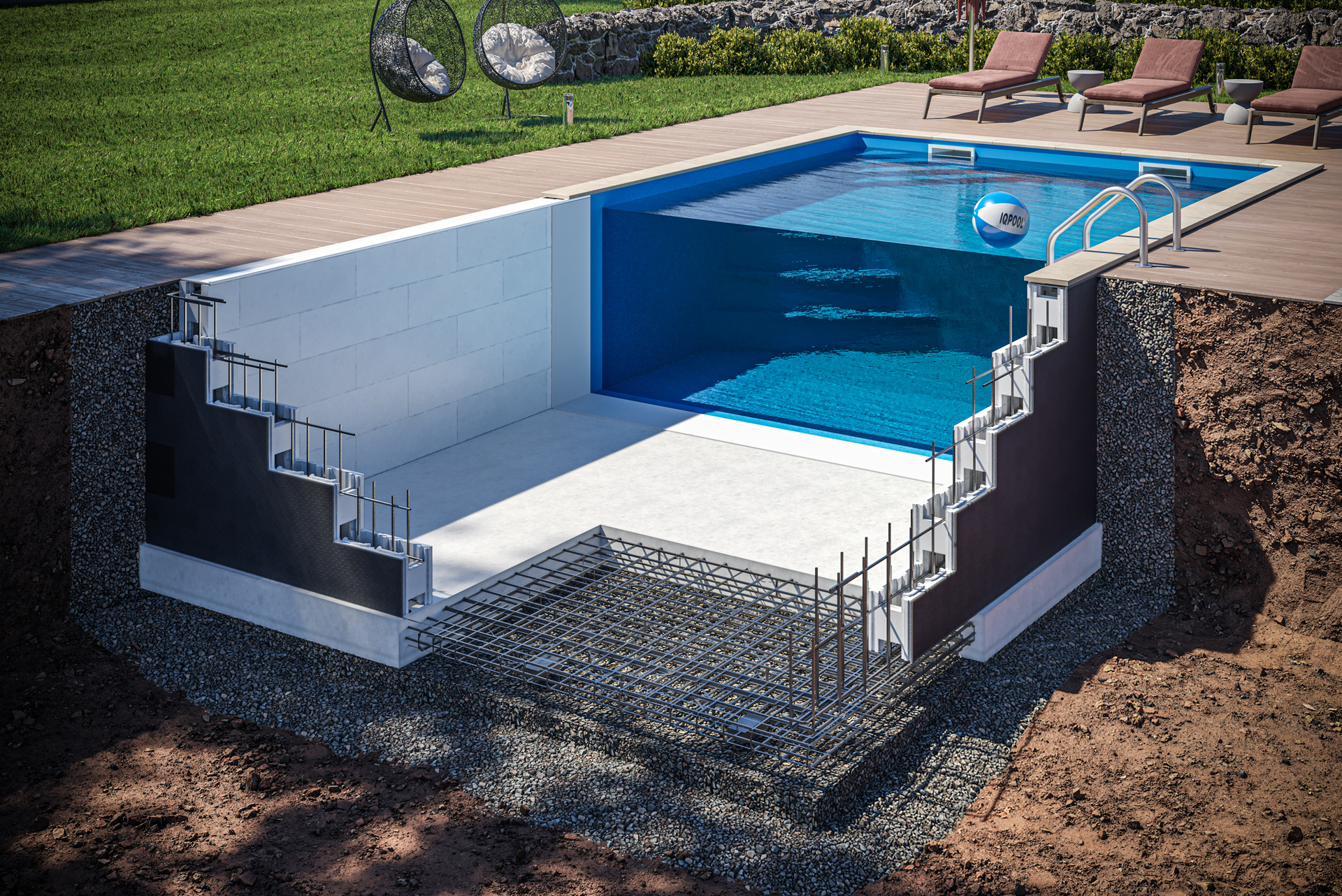
Due-diligence reviews often need more than a hero shot. Cutaway views of pool depth, equipment placement and structural details can make the proposed technical solution easier for investors, clients and project teams to understand alongside the finished aesthetic, provided these elements are based on the supplied project documentation.
Pool Design Rendering Mistakes Can Weaken Marketing Impact
A weak pool design rendering does not just look unfinished – it undercuts the positioning of the whole amenity and often triggers avoidable revision cycles.
3D Pool Rendering Red Flags: Plastic Water, Wrong Light, and Flat Materials
The most common issues in a rushed 3D pool rendering are water that looks plastic rather than reflective, lighting that does not match the stated time of day and materials that read as flat instead of textured. Any one of these breaks the illusion for a reviewer and shifts the conversation from the design itself to the quality of the image.
Why Generic Visuals Weaken Luxury Positioning
A modern pool marketed as a premium amenity needs visuals that match that positioning. Buyers evaluating a premium amenity tend to hold the highest expectations for how finished materials and lighting should look. Stock-style compositions, generic landscaping and flat materials communicate a lower tier of quality than the project is meant to represent, which can undermine the premium positioning that sales and marketing teams are trying to communicate.
Briefing Gaps Create Costly Rendering Rework
Rendering rework often results from an incomplete brief rather than a production error. Missing material references, unclear camera priorities or an undefined time of day can force the team to make assumptions, and if those assumptions do not match the client’s intent, additional revisions may be needed before the piece is ready for approval.
Quality Checklist Before Final Render Approval
Before signing off, review water reflectivity, light direction, material accuracy, landscaping placement and overall composition against the original brief. Confirming these five items as a team, rather than relying on a single reviewer, keeps the final 3d pool renderings consistent with brand standards and avoids late-stage surprises after the images ship to marketing.
Swimming Pool Rendering FAQ:
Costs, Timelines and Project Details
How Much Does Professional Pool CGI Cost?
Cost depends on scene complexity, the number of camera angles, lighting scenarios (day, dusk, night) and whether animation or a virtual tour is included alongside still images. A single hero 3D swimming pool render costs less than a full marketing package covering multiple views and formats.
Can Final Images Meet Fixed Launch Dates?
Yes, provided the brief, reference materials and approval rounds are scheduled against the launch date from the start. A defined production timeline with set preview and revision windows is what keeps a fixed launch date achievable without last-minute compression of the review process.
What Inputs Keep Rendering Production Moving?
Architectural drawings, material references, landscaping intent and any brand or style guidelines keep production moving without stalls. The clearer these inputs are at kickoff, the fewer clarification rounds the team needs before the first preview is ready for review.
Can We Compare Pool Concepts Before Approval?
Yes. Teams can request two or three lighting or material variations of the same 3d pool design before committing to a final direction, which lets stakeholders compare options directly instead of approving a single interpretation without comparison.
How Is Outsourced Rendering Different From Software?
Off-the-shelf visualization software still requires the expertise to model, light and compose a scene effectively. Outsourced production adds a trained team, an established process and quality control at each stage, helping turn 3D pool designs into market-ready visuals rather than internal drafts.
Can Renders Show Equipment and Safety Features?
Yes, pool equipment, safety rails, drainage and other required features can be modeled and shown accurately based on the supplied project documentation, alongside the finished aesthetic. This is often requested specifically for investor presentations or technical project communication, where technical accuracy matters as much as visual appeal.
Who Owns Final Images and Usage Rights?
Usage rights are defined in the project agreement before production starts, and clients receive the agreed rights to use the finished images once the project is completed and paid for. Confirming this upfront avoids ambiguity once the visuals move into public marketing.
How Do We Protect Confidential Pool Designs?
Unreleased projects are handled under confidentiality terms agreed before any files are shared, with project materials treated as confidential throughout the production process. This keeps pre-launch 3d swimming pool design concepts protected until the client is ready to make them public.



Ready for a New View?
Contact Us to Receive a Free Quote


 powered by Borlabs Cookie