


Raw, Refined, Rendered:
3D Rendering Industrial Aesthetics
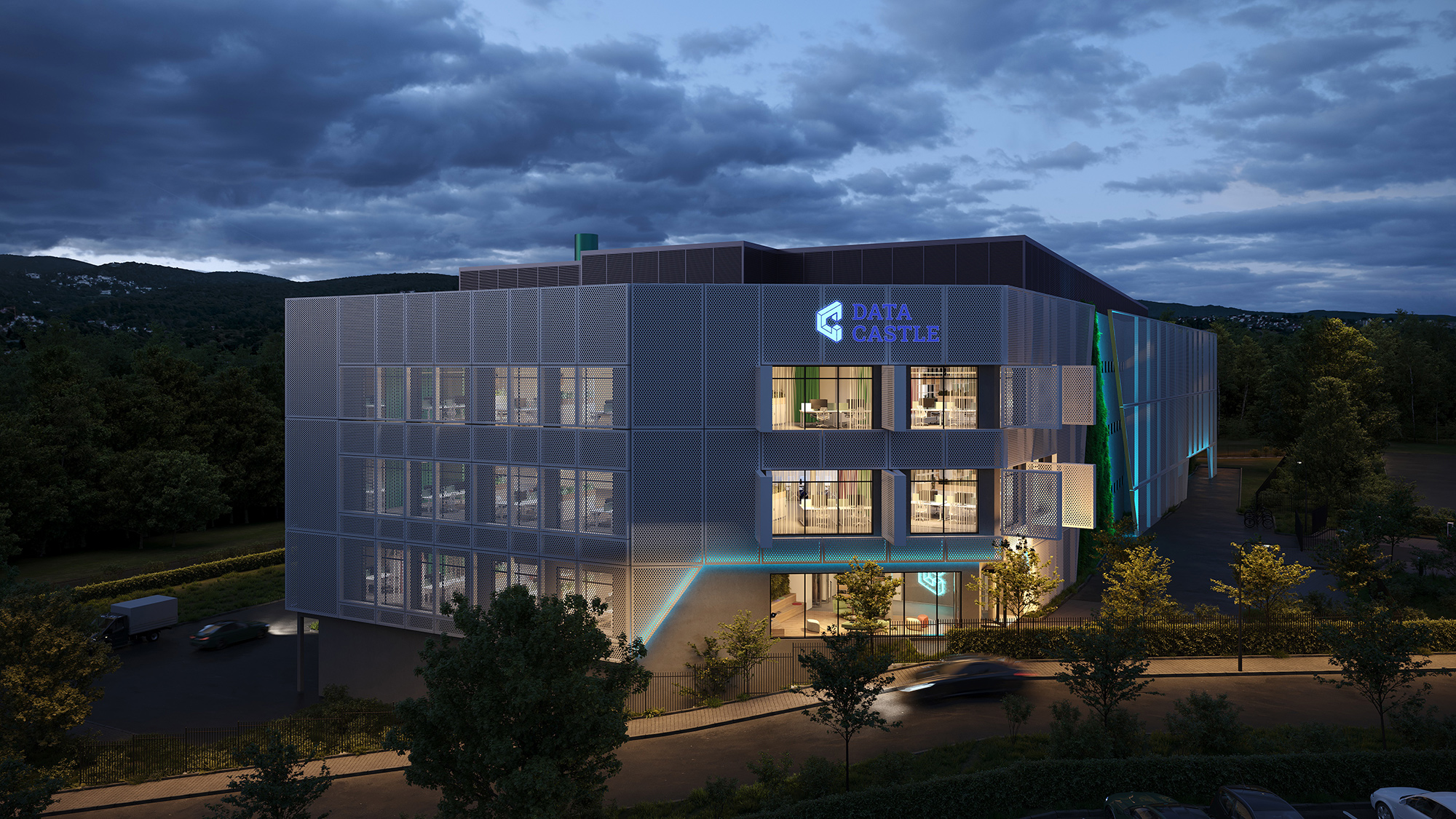
Data center construction broke all records in 2024: in the first half alone, 78 projects worth over $9 billion were launched. At the same time, 341.8 million square feet of warehouse and logistics space is under construction in the US. The boom in AI infrastructure and e-commerce has created unprecedented demand for industrial real estate.
But there’s a problem rarely discussed openly.
Over years of working with industrial real estate, we’ve seen the same scenario dozens of times: projects worth tens of millions of euros get stuck in approvals for months. Local residents oppose “ugly gray boxes” in their neighborhood. Developers present technical drawings and zoning plans. No results.
Then they come to us.
Photorealistic visualization changes the game. A building with a thoughtful facade, integrated into the landscape. Green spaces, pedestrian paths, solar panels. Day and evening lighting showing the property is part of the community, not an industrial zone. Result: approvals accelerate by 3-6 months, local resistance drops, building permits arrive faster.
Data centers, warehouses, fulfillment centers — all face the same challenge: how to turn function into emotion? How to make a “gray box” inspire trust instead of protest?
The Main Challenge: When Communities Say “No”
NIMBYism — The Invisible Enemy of Industrial Projects
Not In My Backyard. Four words that can freeze a multimillion-euro project for months or years. In 2024, California passed Assembly Bill 98, establishing strict buffer zone requirements and sustainability standards to protect local communities. Other states and countries are following suit.
For industrial real estate developers, this means one thing: technical excellence is no longer enough. You can design the most energy-efficient data center or the most functional logistics hub — but if locals see a “gray box,” they will resist.
Public hearings become battlegrounds. Petitions, lawsuits, media pressure. Every delay means lost months and growing financing costs. And in an industry where operational pressure demands project launches in 30-60 days instead of the traditional 12-24 months, time isn’t just money. It’s a competitive advantage.
What Actually Works?
We’ve worked with data centers, warehouse complexes, and fulfillment hubs across Europe and the US. The pattern is always the same: resistance disappears when people see not technical documentation, but a visual story.
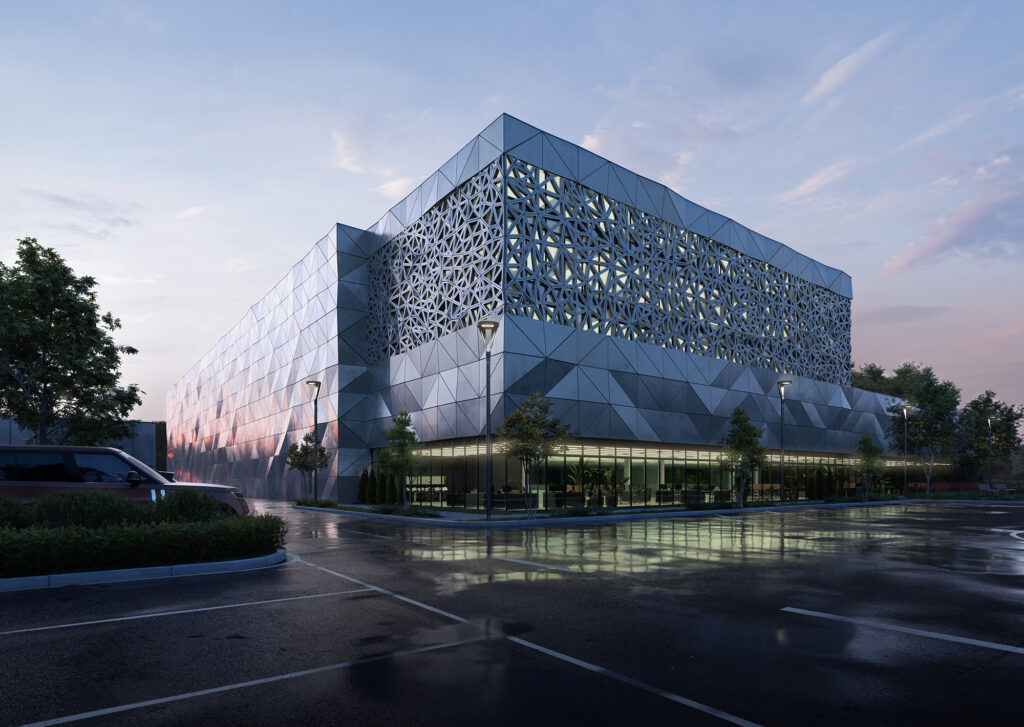
Photorealistic 3D rendering solves multiple challenges simultaneously:
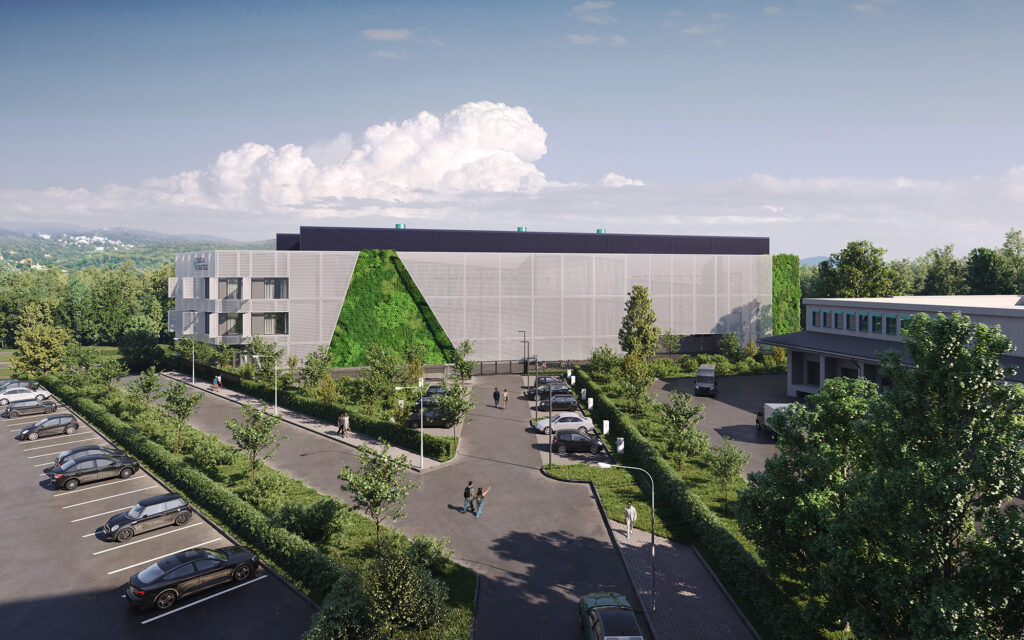
- Landscape integration. Not an abstract volume on a blueprint, but a building organically embedded in its surroundings. We show existing trees, new landscaping, pedestrian zones. People see context — and fear of an “industrial zone” diminishes.
- Architectural facade solution. Even a functional building can be architecturally expressive. Material interplay, window rhythm, color accents. We show it’s not a “box,” but a thoughtfully designed object.
- Human scale. Pedestrians, recreation areas, public space lighting. Visualization shows the property will become part of the community, not an isolated industrial territory.
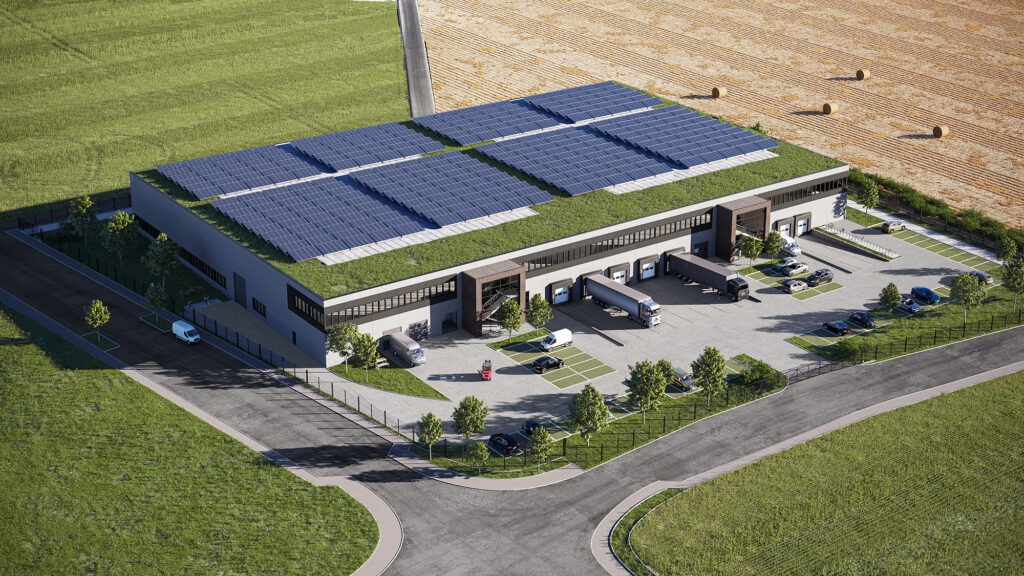
- Visible sustainability. Solar panels, green roofs, rainwater collection systems, EV charging. ESG elements that are just lines in specifications on blueprints become visible proof of responsibility in visualization.
- Day and evening lighting. We show the building won’t be a “dark spot” by day or a “glowing monster” by night. Controlled facade lighting, soft landscape illumination — details that alleviate concerns.
Result? Approvals accelerate by 3-6 months. Objections at public hearings drop. Building permits arrive faster. And most importantly — the project gains support instead of resistance.
Attracting Capital: When Investors Must See the Future
From Technical Documentation to Emotional Narrative
AI-ready data centers require massive investments. This isn’t just about construction — it’s high-density infrastructure with liquid cooling, 50-100 kW racks, and long-term energy consumption commitments of 10+ years. Utilities demand proof of serious intent. Investors want to understand ROI.
The problem: technical drawings don’t sell the dream.
Over a decade of work has taught us one thing: investors make decisions at the intersection of rationality and emotion. Yes, they analyze financial models. But the final “yes” comes when they see the property and feel its potential.
What Investors Need
- Scale and modernity. Show the project’s technological prowess — not through ventilation diagrams, but through visual power. Server rack rows with proper lighting look like a command center of the future. Robotic warehousing systems become arguments for efficiency.
- ROI visualization. We show how the property will generate revenue: warehouse zone utilization, truck flows, logistics efficiency. Investors see not an empty building — they see a working asset.
- WOW-factor for pitch presentations. When your competitor shows PDFs with plans while you present photorealistic 3D architectural rendering in 5K resolution or an interactive 360° tour, the difference is tangible. 80% of our projects come from repeat clients precisely because 3D rendering services work as a deal-closing tool.
The data center market is valued at $281 billion in 2025 with forecasts reaching $400 billion by 2030. Competition for capital is fierce. Visualization isn’t presentation decoration. It’s a competitive advantage.
Pre-sales and Pre-leasing: Selling What Doesn’t Yet Exist
Visibility — The New Currency of Warehouse Real Estate
341.8 million square feet of industrial space is currently under construction in the US. For developers and brokers, there’s one task: start leasing or selling space before construction completes. The problem: how do you show potential tenants or buyers an empty plot of land?
Photography doesn’t work — the property doesn’t exist yet. Blueprints don’t work — they don’t evoke emotions. You need warehouse visualization that creates the feeling of “I’m already there.”
Advantages Over Reality
- Photorealistic “as if already built.” Potential tenants see the finished property: ceiling heights, natural lighting through skylights, loading/unloading zones, office spaces. No imagination needed — everything is right before their eyes.
- Easy variant visualization. Client wants a different facade color? Different internal zone configuration? Impossible with photography. With visualization — a matter of days. We show 3-5 finish options, and clients choose what resonates with their brand.
- 360° tours and interactive walkthroughs. Modern browser technologies enable creating interactive tours accessible from any device — without installing programs or special skills. An investor from the US can “walk through” a warehouse in Germany, change lighting, view different space utilization scenarios. This isn’t just visualization — it’s an experience.
Result: pre-leasing starts earlier, properties fill faster, competitive advantage is clear.
Competitive Differentiation: When All Warehouses Look the Same
Oversaturated Market Demands Uniqueness
146.6 million square feet of industrial space was delivered in just the first half of 2025 in the US. Hundreds more projects in Europe, Asia, the Middle East. To potential tenants or buyers, they all look identical: large rectangular buildings with loading docks.
How do you stand out when functional requirements are all the same?
From “Another Warehouse” to Memorable Story
Visualization creates a project’s visual identity. We don’t just show buildings — we tell stories.
- Emotional storytelling. Our signature “emotional realism” style works even with industrial properties. Sunset light playing on facades. Shadows and highlights on metal surfaces. Details like parked electric trucks or modern employee break areas make the property feel “alive.” This isn’t just a “logistics hub” — it’s a “sustainable logistics innovation center.”
- Architectural expressiveness. Even functional buildings can have character. Material interplay, vertical element rhythm, client corporate color accents. We create visual recognition that stays in memory.
- Premium presentation. Renders in up to 5K resolution, thoughtful composition, professional post-processing. When your marketing looks world-class brand level, clients perceive the property as premium — even if functionally identical to competitors.
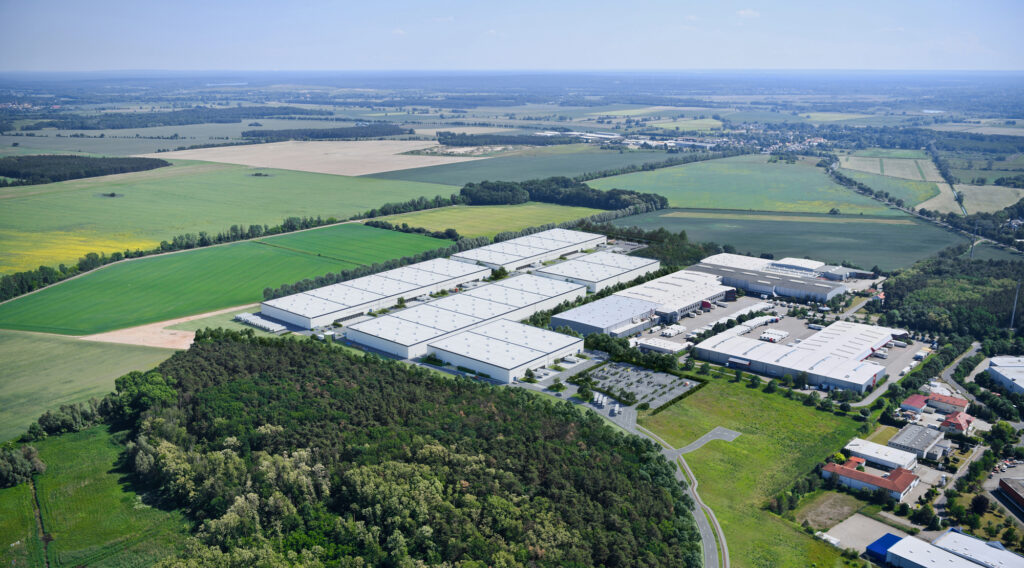
In an oversaturated market, the winner isn’t the cheapest. The winner is the most memorable.
ESG and Sustainability: Showing Responsibility Visually
When “Green” Technologies Must Be Visible
Data centers in 2025 face growing pressure: reconciling AI infrastructure energy requirements with strict sustainability goals. Investors demand ESG compliance. Regulators verify environmental commitments. Local communities want to see responsibility, not just promises.
The problem: sustainability features in technical documentation are just text lines. In visualization, they become visible proof.
What We Show
Solar panels and green roofs — not schematically, but photorealistically integrated into architecture. Rainwater collection systems — visible elements speaking to responsible resource management. EV charging stations for electric trucks — the future of logistics is here. Energy-efficient LED lighting — showing smart light management systems.
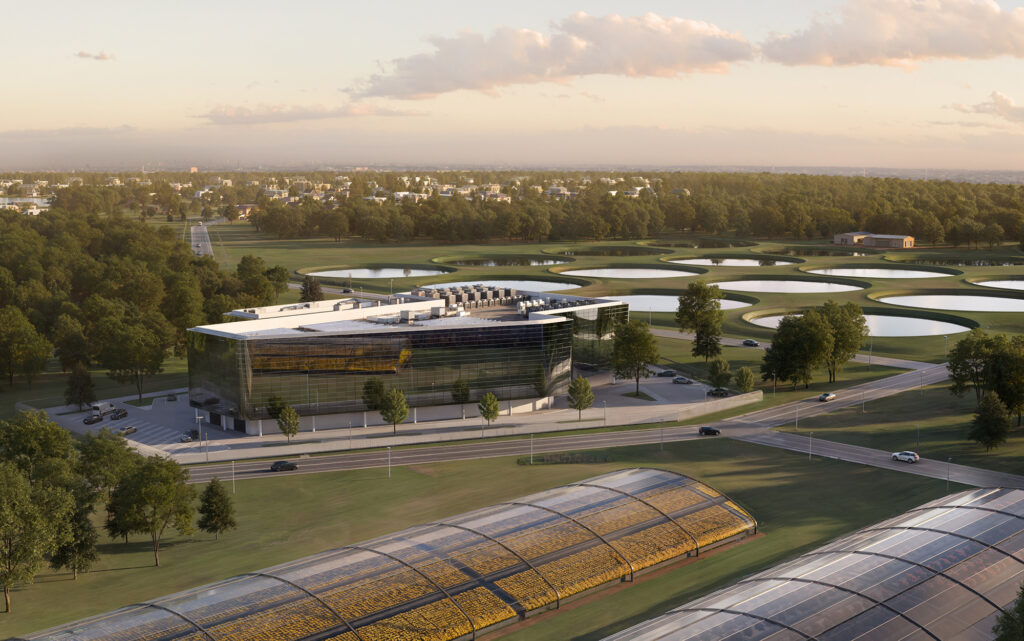
Visualization transforms ESG strategy from a marketing document into reality seen by all stakeholders. This isn’t just compliance — it’s competitive advantage.
Our 3-Level Approach: Turning Function Into Emotion
Level 1: Emotional Realism — Even for Industrial Properties
Over a decade creating visualizations for industrial real estate has enabled us to develop a signature visual style that distinguishes our work. Emotional realism isn’t just technical accuracy. It’s the ability to find beauty in functionality.
Natural lighting emphasizing architectural merits. Dramatic angles showing scale and modernity. Human presence — not just extras, but elements creating the sense this is part of urban fabric, not an industrial zone. Thoughtful details like well-chosen landscaping or subtle highlights on modern materials.
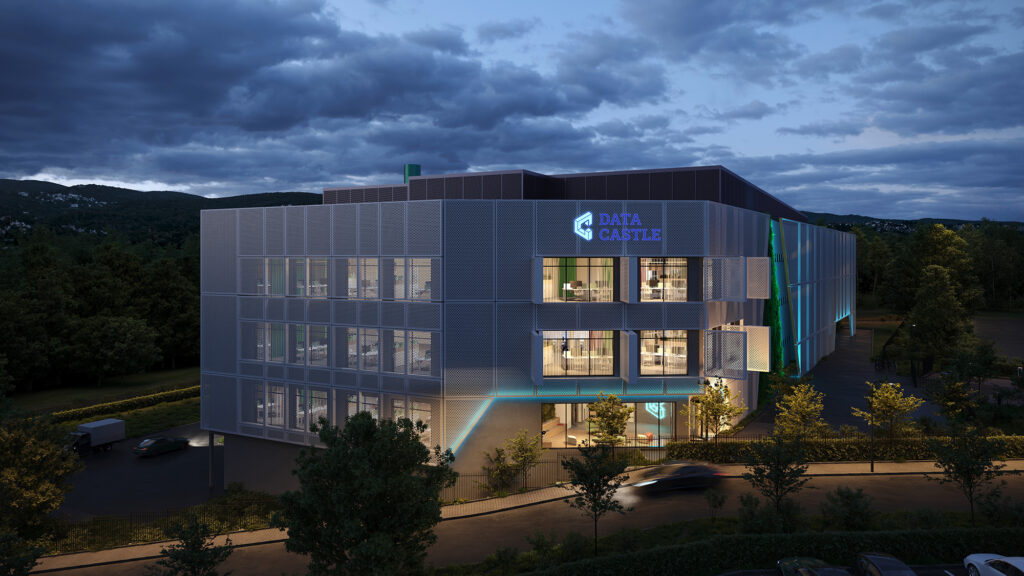
Each of our artists trains with our proprietary visual language manual, guaranteeing emotional integrity and style recognition across all projects.
Level 2: Technical Precision Meets Marketing Power
Render Vision founder Michael Falk is an industrial designer with HfG Offenbach education and over 20 years of photorealistic 3D rendering experience. This combination is key to our approach: we understand both the engineering side (data center cooling systems, warehouse logistics flows) and the emotional side (what it should look like to sell).
We work with technical documentation, CAD files, material specifications. But the result isn’t a diagram — it’s a visual story that convinces investors, regulators, and communities.
Level 3: Interactive Technologies for Deep Immersion
Static renders are the foundation. But for industrial real estate we go further: interactive 360° tours, browser-based configurators accessible from any device, virtual walkthroughs with the ability to change lighting and time of day.
Investors can “visit” properties from anywhere in the world, architects can show different space utilization scenarios, developers can let potential tenants feel like they’re already inside the building.
Proven Process: 5-Step Workflow
Every project goes through a structured process refined over years of work with major clients: Panattoni, GOLDBECK, Commerz Real, Engel & Völkers.
Step 1: Technical Research. Deep documentation analysis, briefing with engineers and architects. We must understand not just “what’s being built,” but “why” — project goals, audience, key messages.
Step 2: Concept Development. Finding visual strategy. Where’s the emotional angle? Which perspectives show scale? How to integrate the property into landscape? What lighting creates the right mood?
Step 3: 3D Modeling. Precise recreation of architecture and materials. Photorealistic textures of metal, concrete, glass. Detail that withstands 5K resolution rendering.
Step 4: Lighting and Composition. Where magic is born. Proper light transforms a “gray box” into an architectural statement. Composition guides the viewer’s eye, creates depth and drama.
Step 5: Rendering and Post-processing. Final rendering using advanced engines and AI optimization. Post-processing to achieve cinematic quality.
Each project is led by a team of at least three specialists: project manager, art director, and 3D artist. This guarantees attention to detail and precise understanding of client goals.
Real Results: Case Studies from Practice
- Data Center for AI Infrastructure Challenge: show investors the technological sophistication and scale of a €120M project. Solution: series of visualizations emphasizing cooling systems, server rows, campus scale. Interactive tour of interior spaces. Result: financing secured 40% faster than projected timeline.
- Logistics Hub with Robotics Challenge: stand out from competitors and begin pre-leasing. Solution: dramatic aerial views showing logistics flow efficiency. Visualization of robotic systems in action. Night lighting creating recognizable image. Result: 75% of space leased before construction completion.
- Warehouse Complex in Residential Area Challenge: gain approval at public hearings. Solution: focus on landscape integration, landscaping, buffer zones, pedestrian infrastructure. Showed building as part of community. Result: project approved with minimal objections, approvals completed 4 months early.
Ready to Turn Your Industrial Project Into an Investment Magnet?
Industrial real estate deserves the same emotional approach as premium residential architecture. Data centers, warehouses, logistics hubs — these aren’t just functional boxes. They’re the infrastructure of the future, and they should look the part.
With 29,000+ renders created since 2012 and clients in 14 countries including the US, Germany, Switzerland, and UAE, we’ve mastered the art of turning function into emotion. Our 3D rendering company helps developers accelerate approvals, attract financing, and stand out in an oversaturated market.
Want to see how your project could look? Contact us. Response within 1-3 hours, proposal within 24 hours.



Ready for a New View?
Contact Us to Receive a Free Quote


 powered by Borlabs Cookie